Get advice and suggestions to make this your perfect trip. or call us on: +255 755 003116
Established in 1959, the Ngorongoro Conservation Area (NCA) was designed as a multiple land-use zone. Its primary goals are to conserve natural resources, protect the interests of the indigenous communities residing within the area, and promote sustainable tourism. The NCA is a one-of-a-kind protected area in Africa, where the conservation of wildlife and natural resources is seamlessly integrated with human development.
Key features of the NCA include the world-famous Ngorongoro Crater, the vast Serengeti Plains, home to approximately 2 million migratory wildlife species of the Serengeti-Mara ecosystem, and the vital catchment forests, including the Northern Highland Forest Reserve (NHFR), also known as ‘Entim Olturot’ in the Maa language.
The NCA is also renowned for its archaeological significance, with the Oldupai Gorge and early human footprints discovered at Alaitole in the Ngarusi area.
Thanks to its exceptional biodiversity, rich cultural heritage, and the harmonious coexistence of wildlife and local communities, the NCA was designated as a UNESCO World Heritage Site and is also recognized as an International Biosphere Reserve under UNESCO’s Man and Biosphere Programme.
The Ngorongoro Conservation Area (NCA) is one of Tanzania’s most iconic and diverse natural regions, showcasing a breathtaking combination of volcanic craters, the historic Olduvai Gorge, expansive savannahs, forests, and bush lands. Spanning 8,300 square kilometers, the NCA stands as a central pillar in Tanzania’s tourism industry.
What makes the NCA truly unique is that it is the only place on Earth where humans and wildlife coexist harmoniously. In recognition of its exceptional biodiversity and cultural significance, the NCA was designated a UNESCO World Heritage Site in 1979 and became part of the UNESCO Man and Biosphere Programme in 1971.
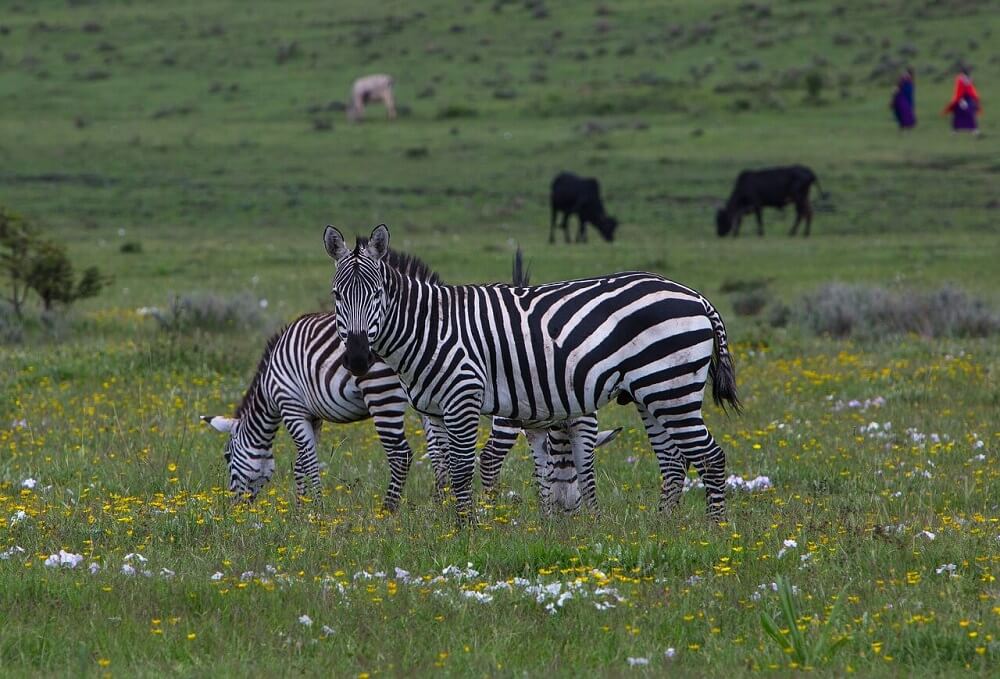
Initially a part of the Serengeti National Park, which was established by the British in 1951, the NCA was separated from Serengeti in 1959, with the creation of the Ngorongoro Conservation Area Authority (NCAA). Unlike traditional conservation areas, the NCA allows for multi-use land management, enabling both wildlife protection and human habitation. This remarkable balance is exemplified by the Maasai people, who live alongside wild animals in this vast landscape. In fact, it is not uncommon to witness Maasai cattle grazing peacefully alongside zebras in the Ngorongoro grasslands.
The Ngorongoro Crater, a stunning geological feature, is one of the crown jewels of Tanzania’s Ngorongoro Conservation Area. Had it not collapsed in a volcanic eruption millions of years ago, it could have rivaled Mount Kilimanjaro as one of the tallest volcanic mountains in the world.
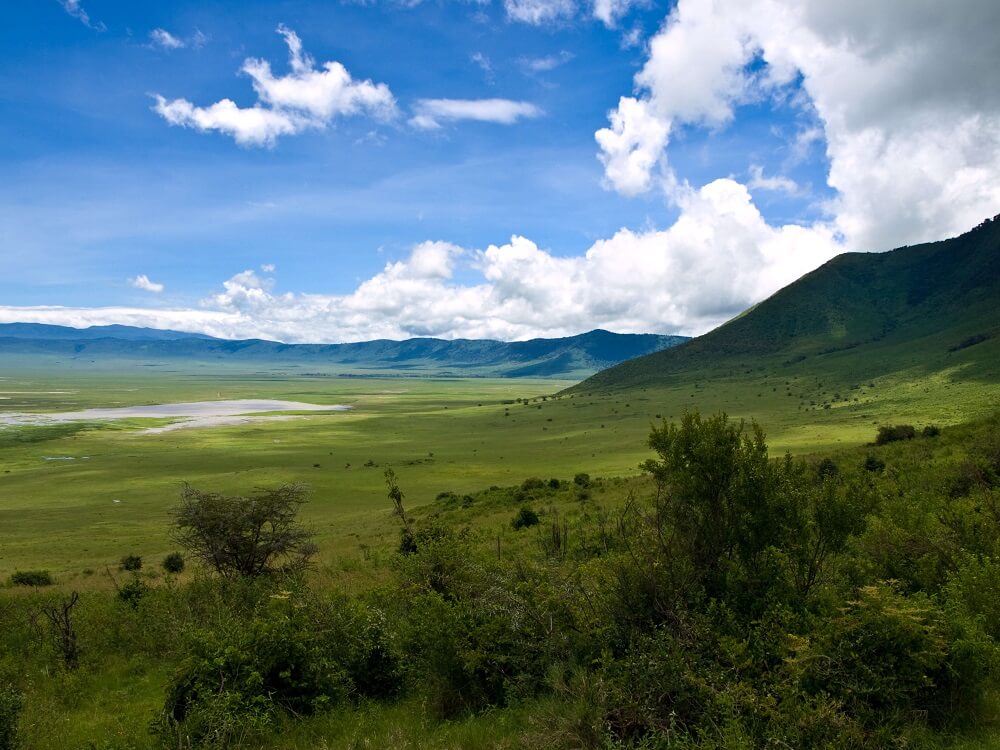
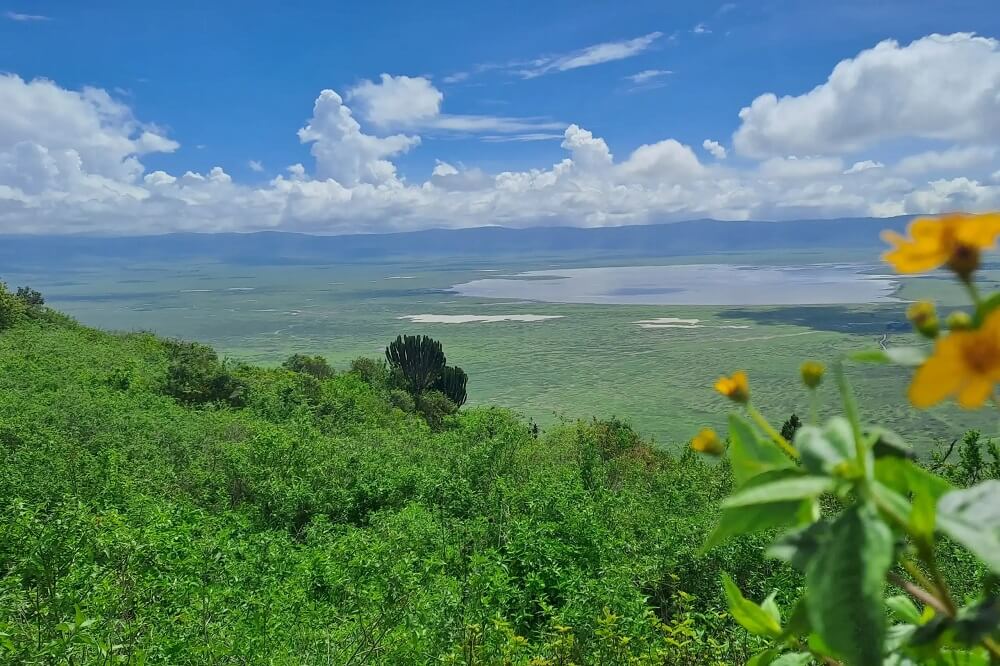
Today, the Ngorongoro Crater stands as the world’s sixth-largest unbroken caldera. Formed around three million years ago, the crater was the result of a massive volcanic explosion, followed by the collapse of the volcano. This caldera is remarkably well-preserved, with a depth of 610 meters and a base area that spans 260 square kilometers, offering visitors a unique landscape teeming with wildlife.
The Ngorongoro Crater is situated in the Eastern Great Rift Valley, approximately 120 km (75 miles) west of Arusha, this vast caldera is a haven for wildlife and a top destination for safari enthusiasts.
Formed around 2.5 million years ago, the crater resulted from the collapse of a massive volcanic cone after a powerful eruption, leaving behind one of the world’s largest and most intact calderas. Spanning 264 square kilometers (102 square miles), it measures between 16 and 19 km (10 to 12 miles) across, with its heavily forested rim rising 610 meters (2,000 feet) above the crater floor to an altitude of 2,286 meters (7,500 feet).
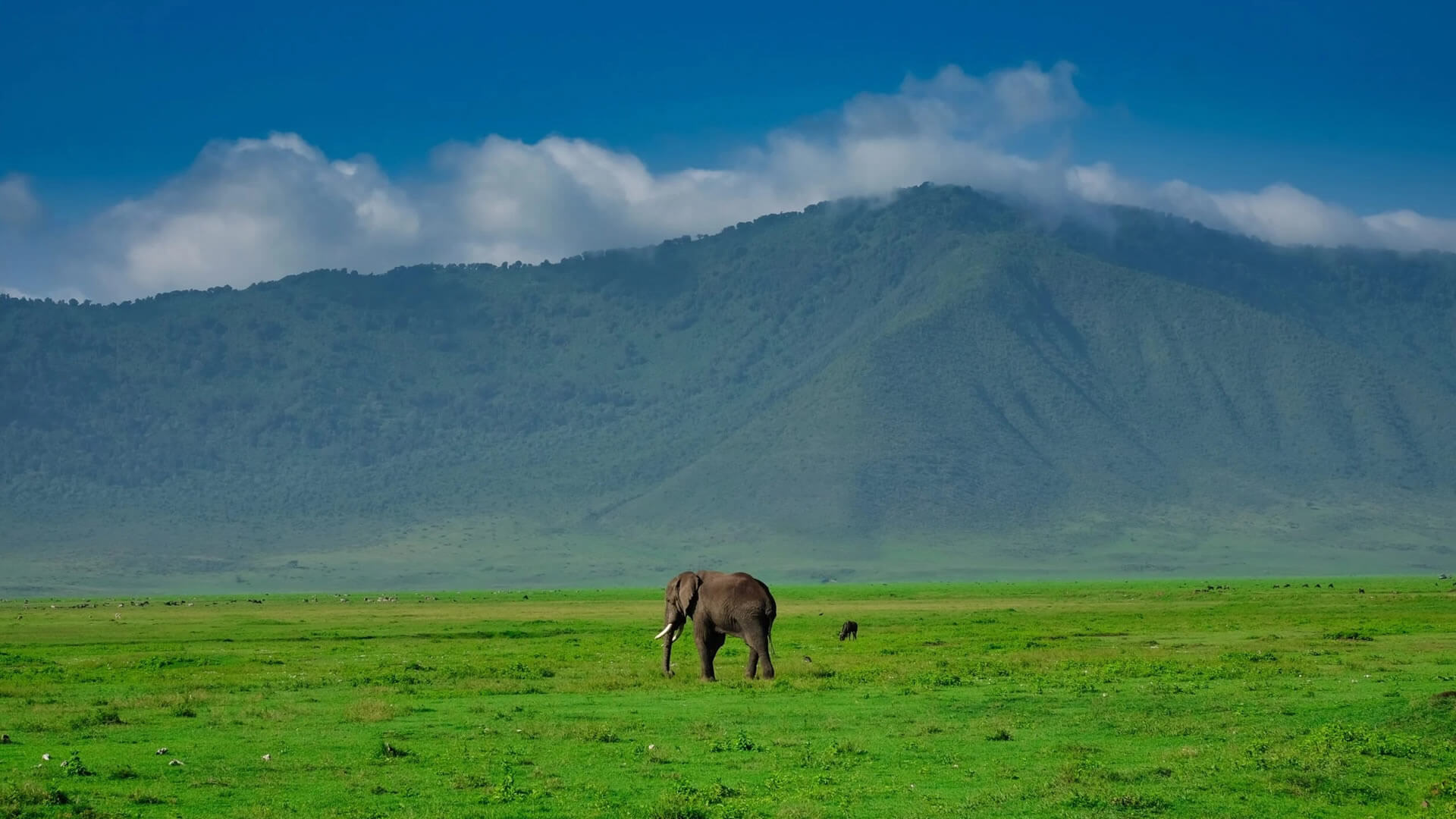
The crater floor, dominated by open grasslands, supports an extraordinary diversity of wildlife, making it one of Africa’s most densely populated conservation areas.
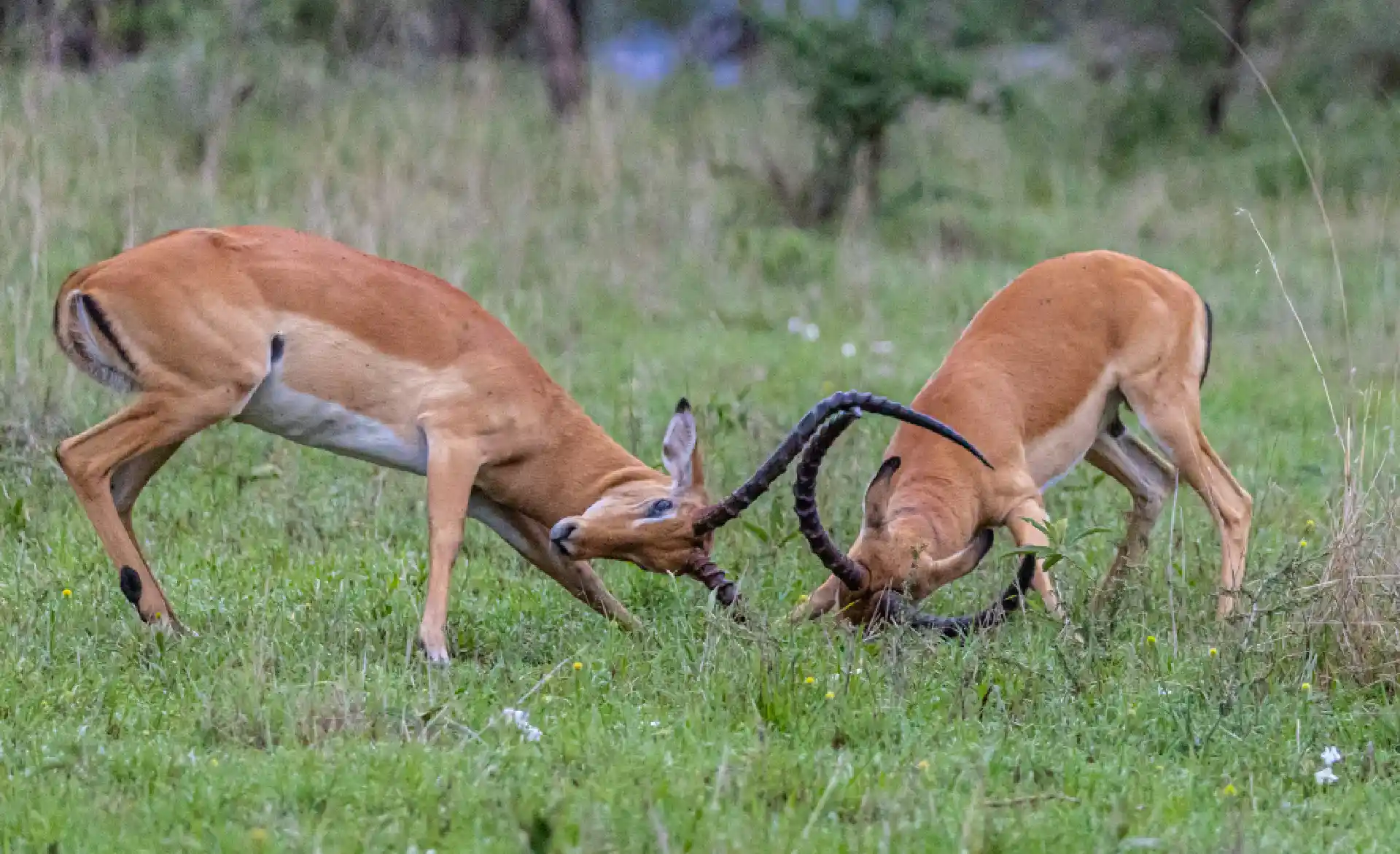
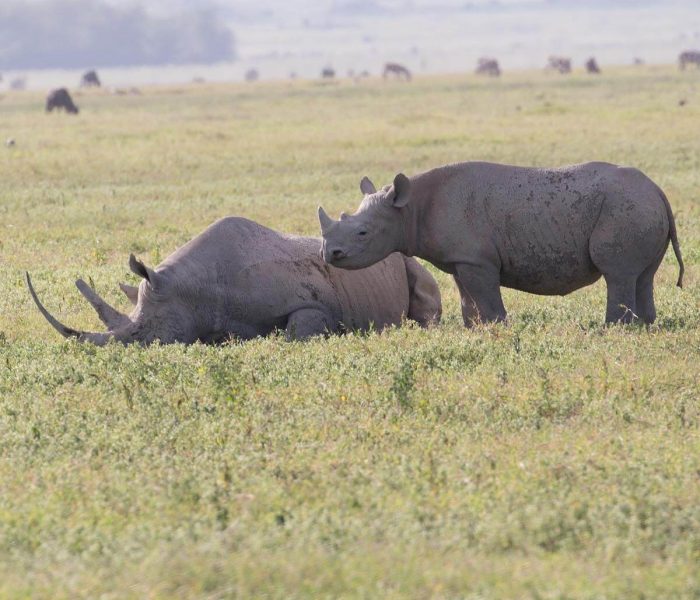
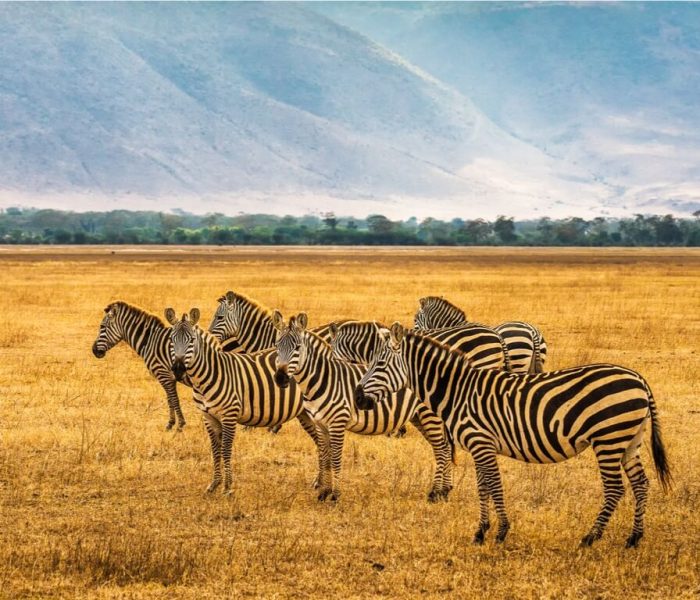
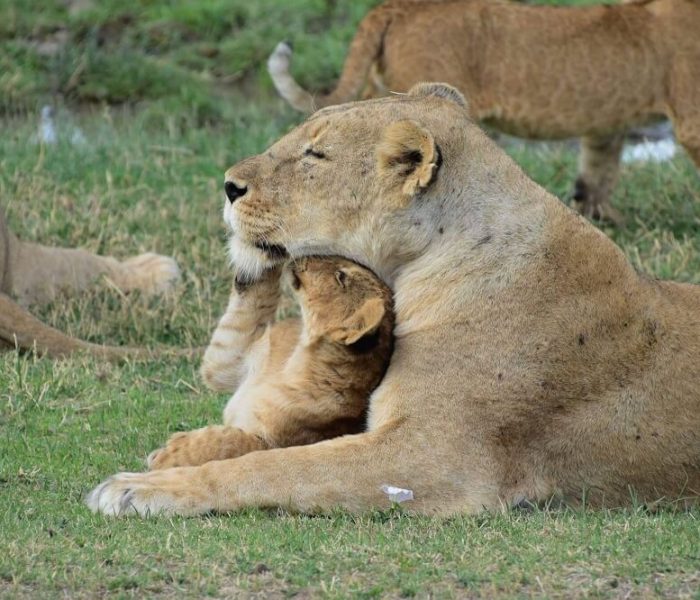
Among its inhabitants are elephants, black rhinoceroses, leopards, buffalo, zebras, warthogs, wildebeests, and gazelles, alongside the world’s highest concentration of lions. The local Maasai people also graze their livestock within the crater, maintaining a delicate balance between human presence and wildlife conservation.
At the heart of the crater lies Lake Magadi, a shallow soda lake surrounded by extinct volcanic peaks. This lake is a crucial habitat for large flocks of pink flamingos, enhancing the crater’s picturesque landscape.
Tourism in the Ngorongoro Crater began in the 1930s with the construction of the first lodge on its rim. Since its official designation as part of the Ngorongoro Conservation Area (NCA) in 1959, more lodges have been developed to accommodate the growing number of visitors.
Recognized for its exceptional ecological and cultural significance, the crater was designated a UNESCO World Heritage Site in 1979.
This awe-inspiring natural wonder continues to attract thousands of visitors each year, offering an unparalleled safari experience in one of the most unique and well-preserved ecosystems on the planet.
The Ngorongoro Crater boasts a mild, temperate climate with distinct rainy and dry seasons. Due to its high altitude, it experiences cooler temperatures than the surrounding areas, especially on the crater rim.
Short Rains (November to December): These rains come in short bursts, typically in the afternoon. While it rains, the showers are usually brief and don’t disrupt your safari experience. These months bring a slight increase in daytime temperatures, with the crater floor reaching around 23°C (73°F). However, mornings and evenings remain cold, with temperatures often dipping to 6°C (43°F) on the rim.
Long Rains (March to May): Rainfall becomes more frequent, particularly during April and May, though it rarely lasts all day. The crater’s cooler temperatures, coupled with occasional cold fronts, make this period a bit chilly, especially on the crater rim.
June to September: The dry season brings sunny days with clear skies, especially on the crater floor, where temperatures hover around 19°C (66°F) in the afternoon.
However, mornings on the rim are often misty and chilly, with temperatures sometimes reaching freezing levels. Warm clothing is a must, particularly during early morning game drives.
October: The dry weather continues until the short rains arrive, typically around late October. Temperatures remain pleasant during the day but cooler at night, especially at higher altitudes.
The Ngorongoro Conservation Area spans from 1,027m to 3,522m (3,369ft to 11,555ft), resulting in varying temperatures across the region.
Both the crater floor (at 1,700m/5,577ft) and the crater rim (at 2,300m/7,545ft) are cooler than the overall conservation area due to their high altitude.
The temperature typically drops by 6.5°C for every 1,000m (3.5°F per 1,000ft) climbed, making the difference between day and night temperatures more noticeable.
Whether visiting during the dry or wet season, the Ngorongoro Crater offers an incredible safari experience with a climate suited to wildlife viewing year-round, though visitors should be prepared for varying temperatures, especially in the mornings and evenings.


Organizing a safari in Tanzania Destination, can be overwhelming due to the many choices available for transport, accommodation, and activities.
Visit Olduvai Gorge, also known as the Cradle of Mankind, where the Leakey family unearthed fossils of the earliest human ancestors.
The gorge offers a unique glimpse into the history of mankind, with a small museum showcasing their discoveries. Don’t miss the Laetoli footprints, which are over 3 million years old.
The Empakaai Crater is a lesser-known but stunning feature of Ngorongoro, offering dramatic views and a deep alkaline lake surrounded by flamingos.
It’s a peaceful spot for birdwatching, and visitors can spot various wildlife, including water bucks, hyenas, and elephants.
For a complete wildlife experience, most tourists combine their Ngorongoro Crater safari with a visit to other parks in the Northern Circuit like Serengeti National Park, Lake Manyara, Tarangire, and Mount Kilimanjaro.
This combination offers a comprehensive safari experience that captures the essence of Tanzania’s diverse ecosystems.
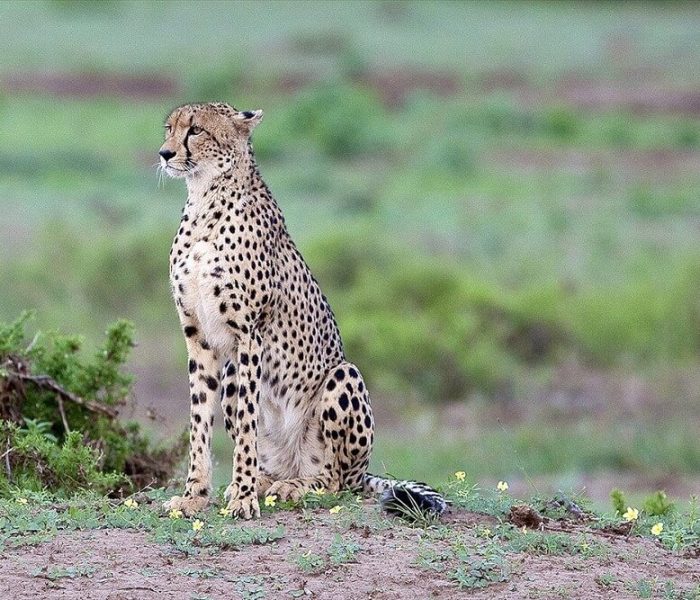
The Ngorongoro Crater and Conservation Area in Tanzania is a must-visit destination for wildlife enthusiasts, attracting thousands of tourists each year. Renowned for its exceptional biodiversity, the area is home to over 25,000 large mammals, including the iconic Big 5: lions, rhinos, leopards, elephants, and buffaloes. Other remarkable wildlife includes hippos, zebras, wildebeest, cheetahs, servals, and crocodiles, as well as around 500 species of birds.
There are numerous activities and attractions within and around the Ngorongoro Crater. Here’s a breakdown of the top experiences:
Game Drives and Wildlife Viewing
A game drive is the best way to explore the crater and see its diverse wildlife. These drives offer the chance to witness the Big 5 up close.
Given the compact nature of the crater floor, game viewing is excellent year-round. A three-day safari is recommended to fully explore the crater’s unique habitats.
Photographic Safari
For photographers, Ngorongoro offers a photographic safari focused on capturing stunning wildlife, landscapes, and birds. In addition to the Big 5, you can also capture Maasai tribesmen in traditional attire.
It’s an ideal opportunity to photograph both the abundant wildlife and the mesmerizing scenery.
Visiting the Maasai People
The Maasai are one of Africa’s most fascinating tribes, and you can visit their villages near the crater.
The Maasai live within the Ngorongoro Conservation Authority. This cultural visit allows you to experience their customs, traditional dances, and vibrant culture.
Exploring the Last Bushmen of Tanzania
The Hadzabe Tribe, known as the last remaining Bushmen of Tanzania, can still be found in remote areas near the Ngorongoro Conservation Authority. Unlike the Maasai, the Hadzabe continue their primitive way of life based on hunting and gathering.
A visit to their habitat offers a glimpse into their unique and ancient traditions. The hadzabe a found few kilimotres away from the Ngorongoro Conservation Area
Nature Walks and Crater Rim Views
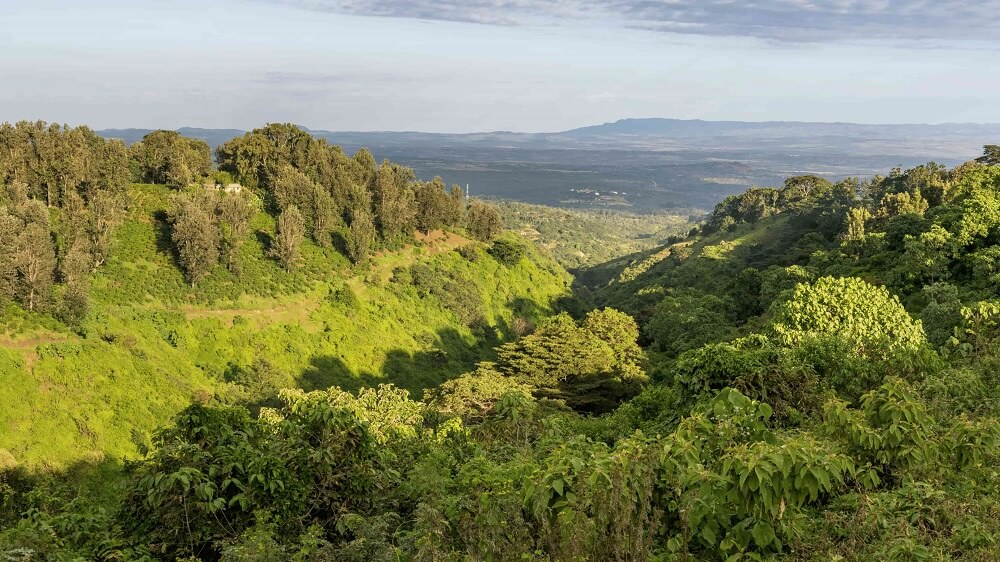
Take a nature walk along the Ngorongoro Crater rim for breathtaking views of the surrounding woodlands, grasslands, and acacia forests.
You can also watch the Maasai lead their cattle back to their kraals.
Bird watching
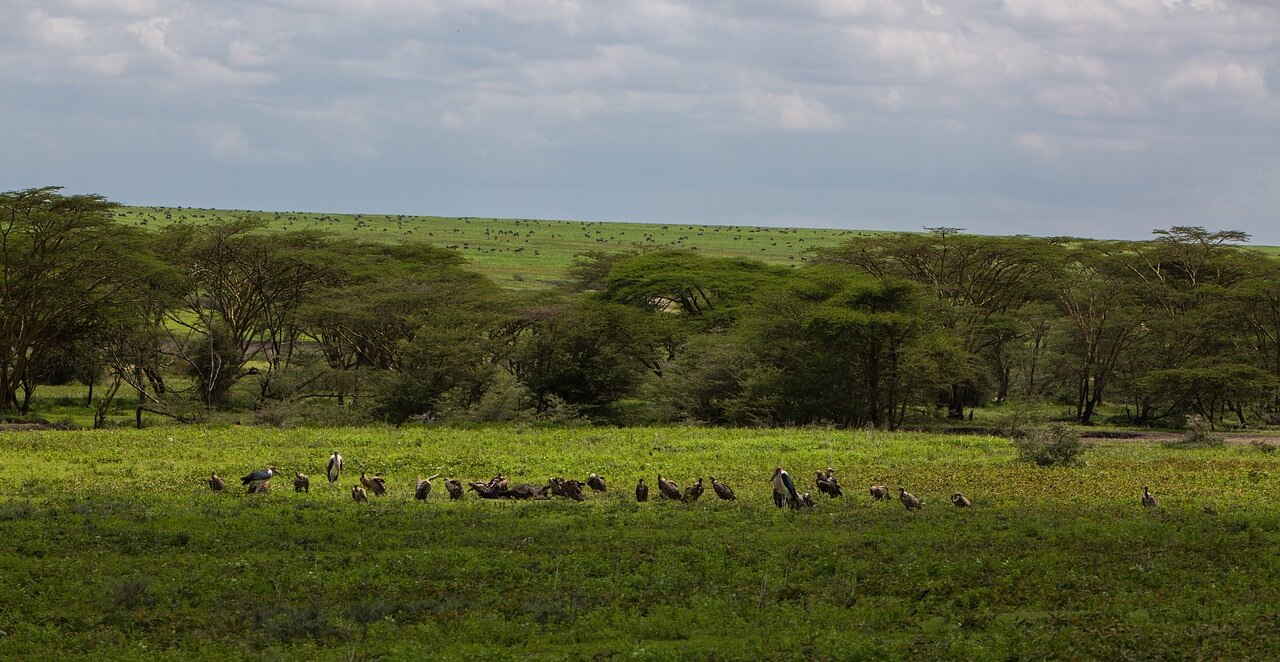
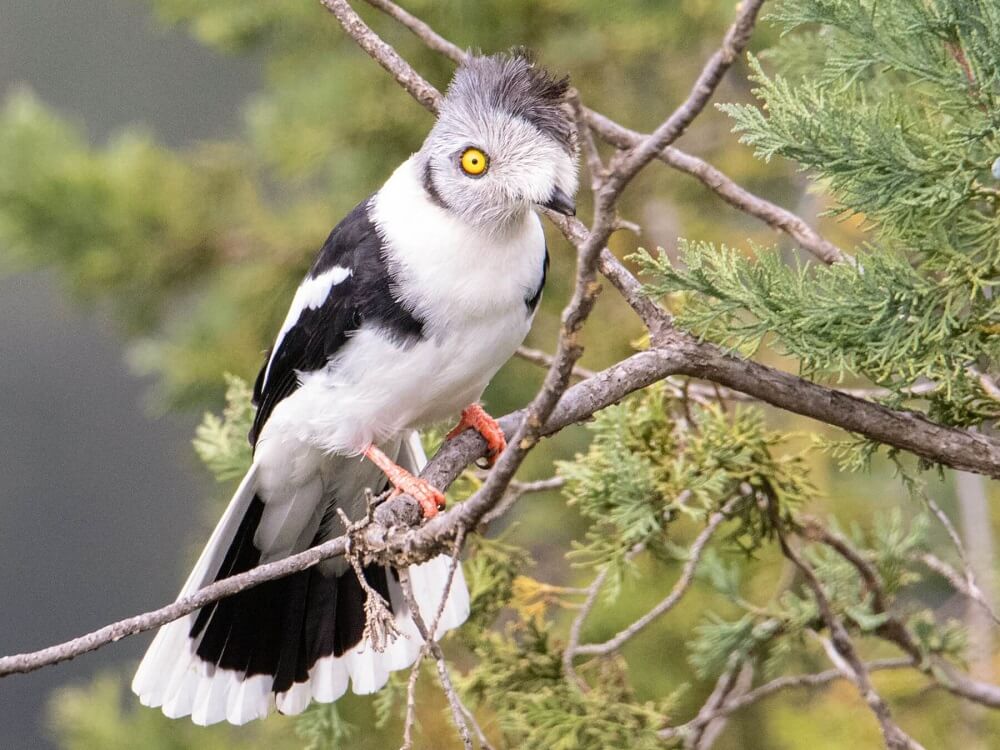
Ngorongoro is a birdwatcher’s paradise. The crater is home to flamingos, Kori bustards, crowned cranes, and many more species.
From the crater rim, you can spot a variety of forest birds like the African cytrill and golden-winged sunbirds.
Hot Air Ballooning
Hot air ballooning are conducted at Ndutu Area within the Ngorongoro Conservation Authority.
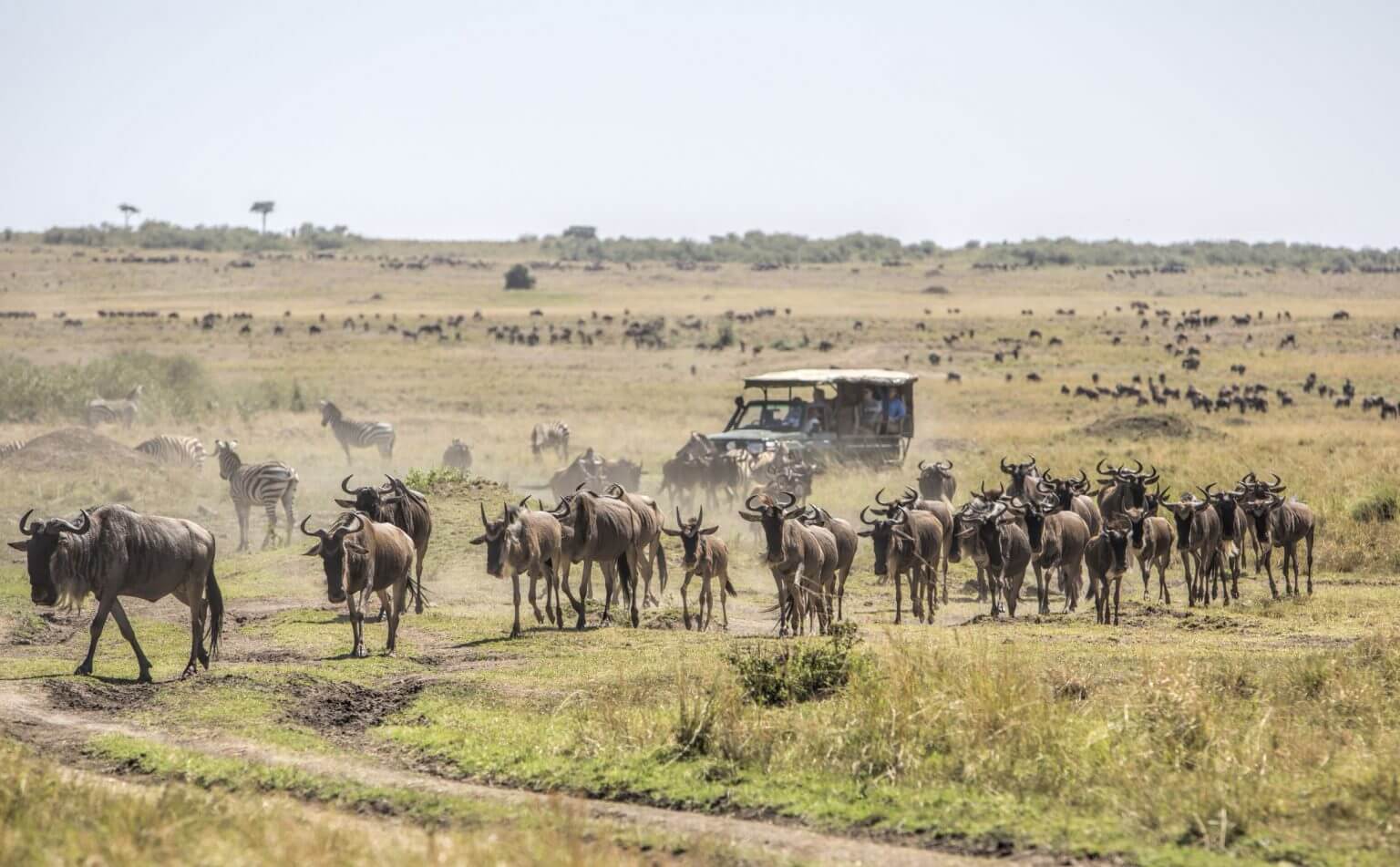
Hot air ballooning is especially magical during the Great Migration when thousands of wildebeest and zebra are scattered across the plains of the Serengeti and the Ngorongoro Conservation Area.
The sight of animals moving in vast herds below you, combined with the golden hues of the sunrise, creates a once-in-a-lifetime spectacle. Hot air ballooning over Ngorongoro is a must for safari-goers seeking a truly unique and elevated perspective of Tanzania’s wildlife and landscapes
The Ngorongoro Conservation Area (NCA) offers a remarkable safari experience throughout the year, with each season bringing its own charm and advantages. However, one of the most rewarding times to visit is during the rainy season in April and May. While the roads may be muddier, the safari vehicles are equipped to handle the terrain. During this period, the Ngorongoro Crater and surrounding highlands transform into a lush, green paradise, often dotted with wildflowers in May.
This off-peak season offers numerous benefits, including fewer visitors and safari vehicles, exceptional wildlife and birdwatching opportunities, and discounted safari rates. The quieter atmosphere allows for a more intimate experience in one of Tanzania’s most iconic natural wonders.
From July to September, the dry season brings the high tourist season, and visitors can expect an increase in vehicles, especially on the crater floor. The confined nature of the crater makes the presence of many vehicles more noticeable compared to other open areas.
The short rains in November and December rejuvenate the landscape, making it an ideal time for stunning photography, particularly in January when the environment is fresh and vibrant.
No matter when you choose to visit, Ngorongoro Crater remains a must-see destination, renowned for its extraordinary concentration of wildlife and breathtaking landscapes. Whether you are drawn to the lush greenery of the rainy season or the vast plains during the dry months, the Ngorongoro Conservation Area offers a once-in-a-lifetime experience year-round.
The Ngorongoro Crater is a wildlife haven, home to over 25,000 animals, including the Big 5 lion, leopard, elephant, buffalo, and rhino. These iconic species are some of the most sought-after sightings on a Tanzania safari, and the crater provides unparalleled opportunities to observe them up close. Alongside the Big 5, other residents of the crater include zebras, wildebeests, hyenas, jackals, and flamingos.
For the best wildlife viewing in Ngorongoro, the dry season from June to October is ideal. During this period, the grassy plains are short, and wildlife congregates around the watering holes, making for easy sightings and excellent game viewing conditions. However, if you prefer fewer tourists and are looking for scenic beauty, the wet season from March to May is also an option. The rains transform the landscape into a lush, vibrant green wonderland, though the occasional rain showers may affect the safari experience.
Ngorongoro is also part of the Great Migration route, one of the most awe-inspiring natural events on earth. Each year, around 1.5 million wildebeests and zebras gather across the southern Serengeti and the western Ngorongoro plains for calving season. This typically begins in mid-December and lasts through late March, with the herds slowly moving north and west as the season progresses.
During this time, the plains are alive with the sight of newborn calves, a photographer’s dream and a must-see spectacle for every safari enthusiast. The predators are also out in full force, making this an excellent opportunity for cat sightings (lions, cheetahs, and leopards), with scavengers closely following to claim the scraps. Witnessing the Great Migration is a phenomenal experience that should be on every nature lover’s bucket list.
While bird watching in the Ngorongoro Crater is rewarding year-round, the best time for a variety of species is from November to April. During this period, you’ll find:
Palearctic Migrants: These migratory birds travel from Europe and Asia, making the crater a prime destination for birdwatchers.
Intra-African Migrants: These birds migrate within Africa, adding to the diversity of species.
Breeding Plumage: Many resident birds are in their vibrant breeding plumage, making them even more stunning to observe.
For those interested in wildlife, June to October during the Dry season is the ideal time for game viewing, as animals tend to gather around water sources, making sightings more predictable and accessible. However, bird watching remains excellent throughout the year.
Most visitors explore the Ngorongoro Crater as part of a Northern Circuit Safari, which covers Tanzania’s major parks.
Ngorongoro is conveniently located en route to Serengeti National Park and is a short drive from Arusha, the gateway for most safaris in Northern Tanzania.
For those looking to save time, small aircraft (either chartered or scheduled) offer flights to various Northern Circuit parks.
You can fly directly into Serengeti and then return by safari vehicle, passing through Ngorongoro Crater, or vice versa.
From Serengeti (Seronera): It takes about 3 hours (140km/90mi) to drive to Ngorongoro Crater.
The journey can take longer, especially with wildlife viewing stops along the way.
From Lake Manyara National Park: The drive is about 2 hours (80km/50mi) to Ngorongoro Crater.
From Tarangire National Park: Expect a 4-hour drive (180km/110mi) to reach the Crater.
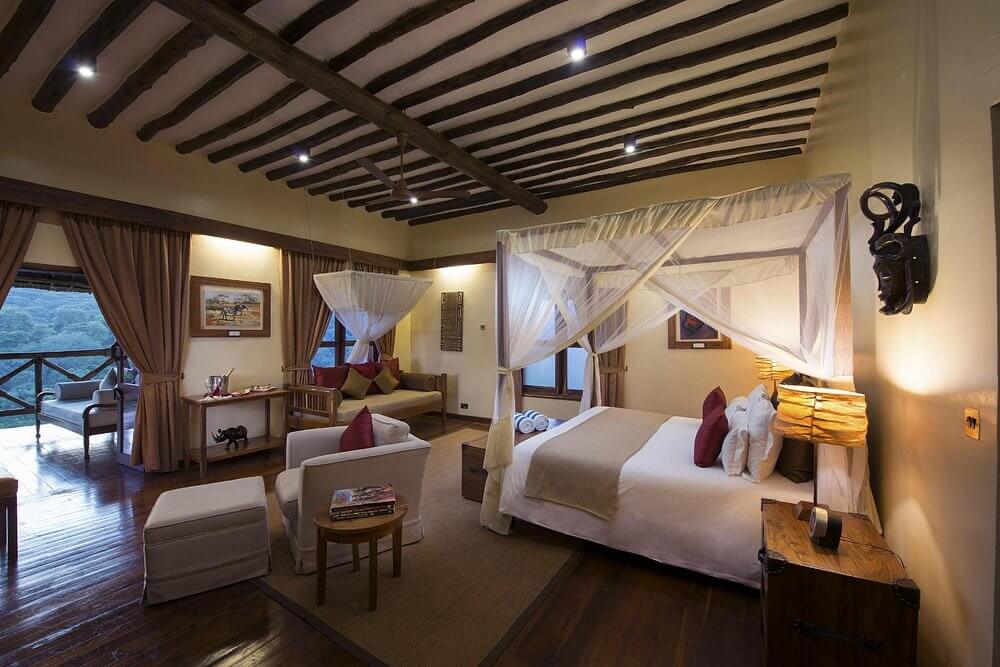
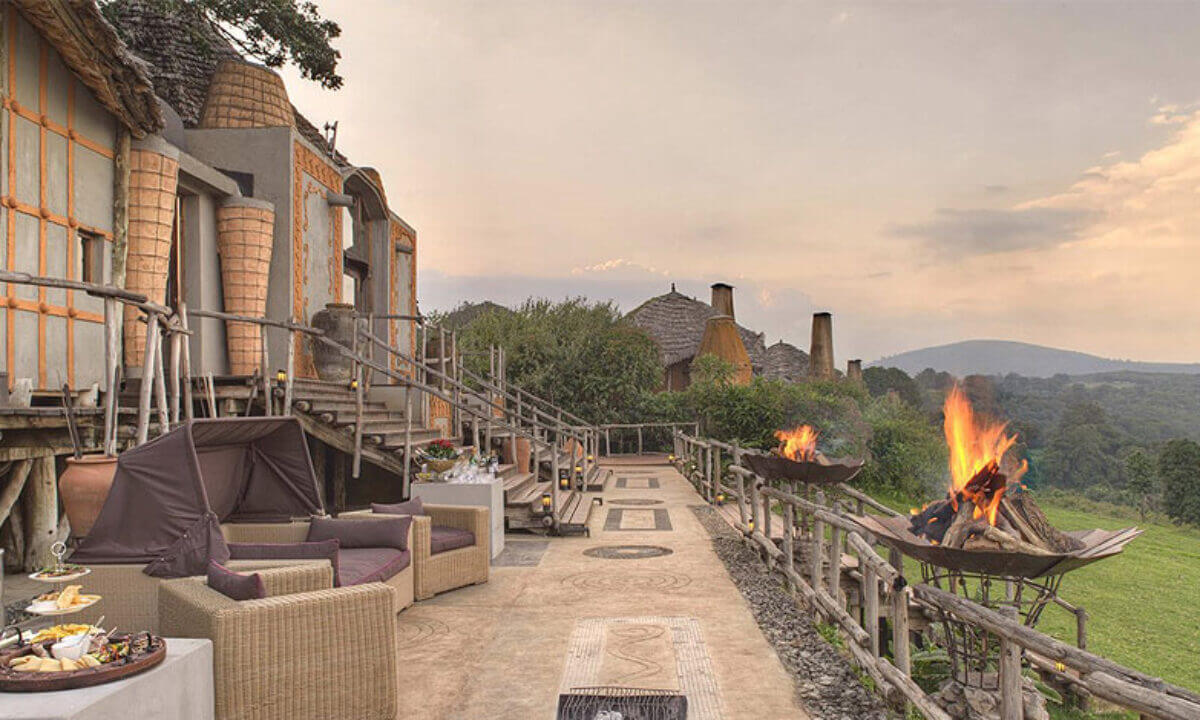
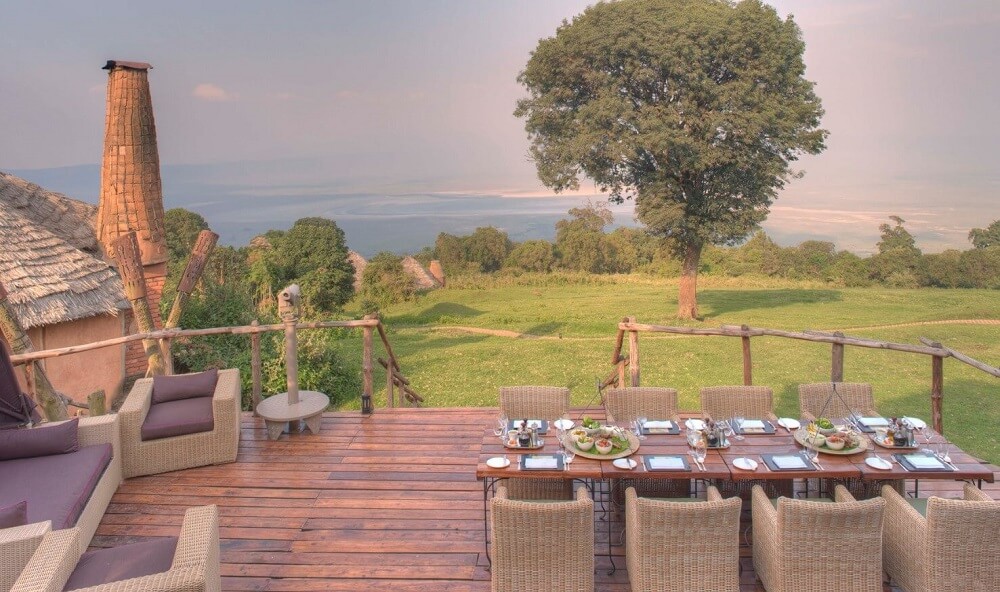
The NCA is home to 11 lodges, with six top-rated lodges offering some of the best views and experiences:
Five lodges are located along the rim of the Ngorongoro Crater, offering panoramic views of the crater floor and surrounding highlands.
One lodge is situated in the Ndutu Area, known for its rich wildlife, especially during the wildebeest and zebra calving season.
These lodges offer a peaceful and luxurious experience, blending comfort with nature.
For travelers looking for a more intimate experience with nature, NCA has 49 special campsites located in prime spots for wildlife viewing and stunning landscapes.
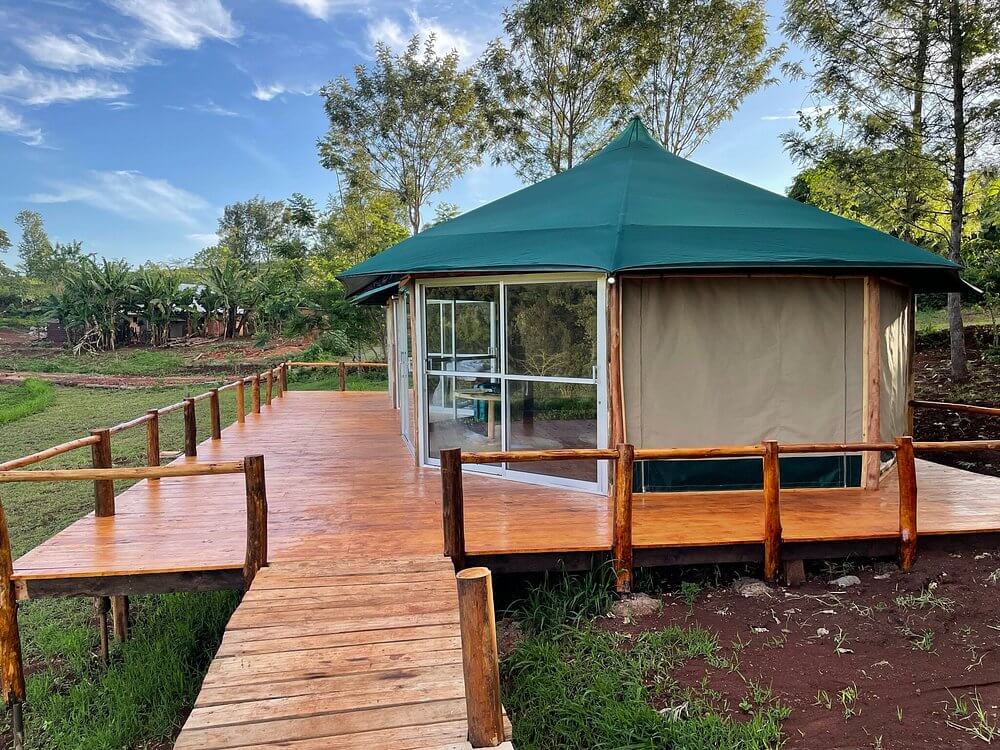
Two luxury tented lodges are located in Ndutu Area.
One tented lodge is near the Olduvai Gorge, a site known for its archaeological significance.
Another tented lodge is located near Esirwa Village, about halfway between the Ngorongoro Crater and the famous Laetoli Footprints site.
NCA also has one public campsite, offering an affordable yet adventurous overnight experience surrounded by the sounds of nature.
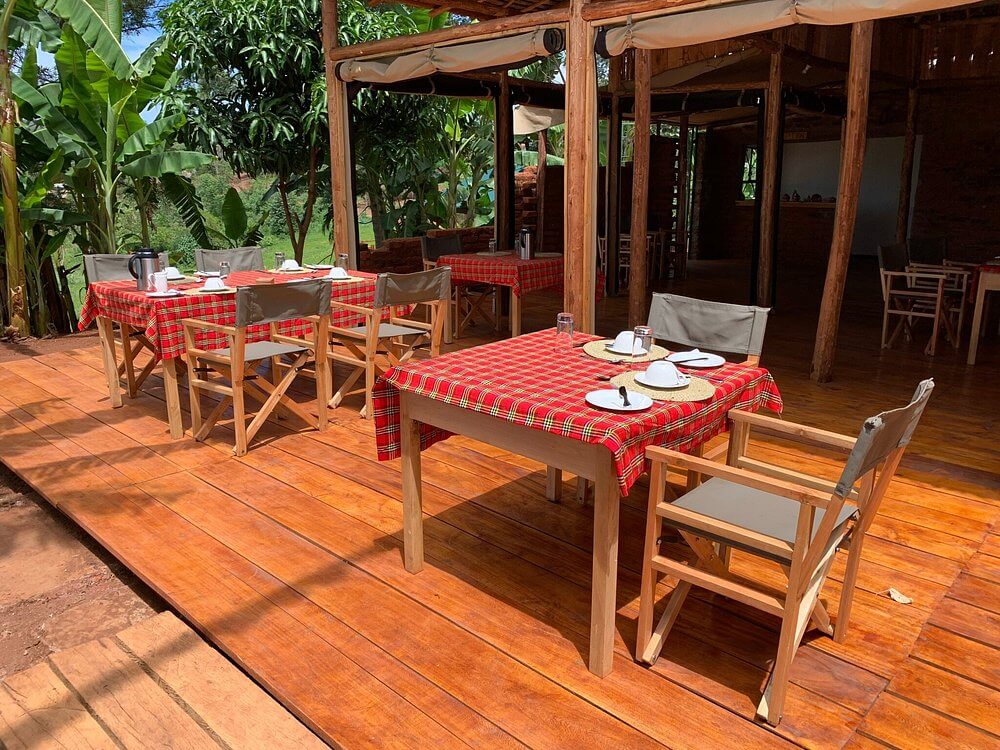
All accommodation options offer high-quality services, including:
Dining and food services
Tourism information
Fitness activities
Recreational activities
Whether you prefer the comfort of a luxury lodge or the thrill of camping under the stars, Ngorongoro Conservation Area provides a diverse range of accommodation options to enhance your safari experience.
EXCELLENT Based on 271 reviews Crystel E2025-07-21Verified 7-day then two-day safari near Lake Natron Our safari went crescendo: Taranguire, Lake Manyara, Ngorongoro and finally the superb Serengeti (4 days). Luck was with us, especially in the immense plains of the Serengeti: leopards, deer, cheetahs, families of lions and elephants, warthogs, zebras, giraffes, sumptuous birds, hyenas, and I pass...a wonder! Magic!Our young Francophone guide, Samuel, shared his many knowledge with us with immense enthusiasm and was absolutely adorable with our two children, ages 7 and 9; Osman, our driver, did everything to please us and took us to see the impressive wildebeest migration. As for our very smiling cook, Clemens, he regaled us with his delicious dishes. At the end of our Tanzanian stay, we spent two days in the incredible landscapes of Lake Natron and sacred Lengai Mountain. What to end the stay in style near the Maasai populations! Malagouen I2025-07-07Verified An extraordinary journey! A big thank you to Sebastian for organizing our 3-day safari (Lake Manyara, Ngorongoro Crater and Tarangire). Our thanks also to our driver/guide Charles: kind, attentive and warm. He lent himself to the game of animal hunting with us.We return with our heads full of unforgettable memories! Thank you, Congema! AmandineMB2025-03-03Verified Unforgettable memories with family We were able to organize with Sébastien (French) the safari we wanted with our two children. He was able to respond to our request and was particularly responsive and good advice, before and until the end of the booking. We took plenty of eyes and the choice of accommodation was just perfect. Thank you very much to our guide Ousman for his dedication and understanding for our level of English. Ahmed Al Maktoum2025-02-24Verified It was a fascinating trip for us Congema Safaris offers unforgettable wildlife adventures across Tanzania’s stunning landscapes. Specialising in tailor-made safaris, we offer expertly guided trips to the Serengeti, Ngorongoro Crater, Tarangire and beyond. From the Great Migration, to encounters with the Big Five, to cultural experiences with local tribes, our personalised itineraries ensure an authentic African experience. With a commitment to sustainability and customer satisfaction, Congema Safaris offers safe, comfortable and immersive experiences. You can create your dream safari with them, a remarkable journey that blends adventure, luxury and conservation. Quentin P2025-02-10Verified Kilimanjaro - Lemosho route It was an unforgettable experience.We've felt safe.Big up to Paul, Isaac, Shafi, Kasim and all the stuff. Asante sana! Julia J2025-02-05Verified Kilimanjaro Tour - Lemosho route We had the chance to discover Kilimanjaro with the Congema team for 8 days on the road to Lemosho. We had an extraordinary experience! We were warmly welcomed by the team that became our surrogate family during its 8 days. Victor, our guide who knows Kilimanjaro like no one else offered us a personalized discovery of the place with the help of Freddy and Isaac the assistant guides. The team accompanied us step by step through the good times as well as the most difficult ones with kindness and generosity. This is one of the most intense physical, psychic and human experiments I have ever conducted. I'm glad I was able to do it with this dream team. We met some great people. I can only recommend stays with Congema. Thank you again. Julia Beau Alexander2025-02-03Verified I will come back to you again!! Congema Safaris offers unforgettable wildlife adventures in Tanzania, specializing in tailor-made safaris to Serengeti, Ngorongoro Crater, Tarangire, and beyond. With expert guides and personalized service, they ensure an authentic African experience, whether it's a luxury safari, budget camping, or cultural tour. Witness the Great Migration, encounter the Big Five, or explore remote wilderness areas. Congema Safaris prioritizes sustainability and responsible tourism, providing exceptional experiences while supporting local communities. Embark on a journey of a lifetime with Congema Safaris and discover Africa’s breathtaking beauty. Audrey D2025-02-03Verified Honeymoon Amazing stay it was beautiful that it was the place.Or We slept and especially the parks we visited. Thanks to Johnny for doing everything possible so that we could see all the animals and especially the Big Five. Thanks to congema we were very well received, everything was nickel thank you for accompanying us from the beginning to the end I strongly advise you if you have a Safari to do GoPlaces650352715492025-01-29Verified A beautiful discovery of Tanzania Beautiful trip to the 4 parks where we could see many animals and beautiful landscapes. Well appreciated camping formula. Thank you to our escorts. First of all, Osman, our super driver, a great tracker always in a good mood despite long hours driving in difficult conditions. His constant concern to find all the animals for our pleasure was greatly appreciated. Asante sana Osman.As for our super cook, Clemence, a real cordon bleu 👍 He made us discover Swahili cuisine and feast us from breakfast to dinner every day. Thank you, Clemence.And of course, Avith, our charming and dedicated French guide always at our service. His knowledge of animals was highly appreciated as well as his kindness.Thanks also to Andrea who took us to the Masai village of Olpopongi and who added to the program the visit of a super interesting local market. A very nice discovery of Tanzania and its kind and devoted inhabitants with Congema. We recommend 100%Martine & Eric Owen K2025-01-12Verified Their team ensures an immersive journey. Congema Safaris offers unforgettable wildlife adventures across Tanzania’s most iconic destinations. Specializing in tailor-made safaris, Congema provides unique experiences in Serengeti, Ngorongoro Crater, and Mount Kilimanjaro. Their expert guides ensure an immersive journey into Tanzania’s diverse ecosystems, showcasing the Big Five, wildebeest migrations, and breathtaking landscapes. Committed to sustainable tourism, Congema partners with local communities to promote conservation and cultural exchange. Whether it’s a luxury lodge safari or a budget-friendly camping adventure, Congema Safaris guarantees personalized service and memories to last a lifetime. Explore Tanzania with Congema for an adventure like no other!Verified by TrustindexTrustindex verified badge is the Universal Symbol of Trust. Only the greatest companies can get the verified badge who has a review score above 4.5, based on customer reviews over the past 12 months. Read more
Choose a destination, pick your properties, and we’ll do the rest
© 2026 Congema Safaris. All rights reserved.