EXPLORE

Kilimanjaro Mountain

Mountain Kilimanjaro Lemosho Route
Picture of Chat to an Kenya Safari expert

Chat to an Kenya Safari expert

Get advice and suggestions to make this your perfect trip. or call us on:
+255 755 003116

Picture of Chat to an Kenya Safari expert

Chat to an Kenya Safari expert

Get advice and suggestions to make this your perfect trip. or call us on:
+255 755 003116

Highlights of the Lemosho Route

Starting Point

The trail begins on Kilimanjaro’s western slopes and ascends through lush forests and the scenic Shira Plateau.

Cathedral Peak

A highlight of the trek, this acclimatization hike takes you to 3872 meters at one of Shira Volcano’s highest points, offering breathtaking views.

Wildlife Encounters

On the first day, groups may be escorted by an armed ranger to ensure safety, as the Lemosho Glades are home to buffalo, elephants, and other wildlife.

Route Overview

The Lemosho Route has become a favorite among Kilimanjaro climbers, and for good reason.

Known for its spectacular views, excellent acclimatization profile, and high summit success rates, it’s an ideal choice for those seeking a rewarding Kilimanjaro adventure.

Itineraries and Recommendations

Duration Options

Choose between 6, 7, or 8 days on the mountain.

Why choose 6-8 Days

For better acclimatization and a reduced risk of altitude sickness, we strongly recommend the 7 or 8-day itineraries. The additional days allow your body to adjust and provide extra time to rest before summit night.

The Lemosho Route is one of the less crowded and most scenic trails, making it an exceptional choice for an unforgettable journey to the Roof of Africa.

Explore Lemosho RouteItinerary

Mount Kilimanjaro

8 Days Lemosho Route

The 8-day variation of the Lemosho route presents an optimal choice for ascending Mount Kilimanjarovia this route due to its favorable acclimatization

Mount Kilimanjaro

7 Days Lemosho Route

The 7-day Lemosho route is preferred over the six-day option as it provides an extra day for acclimatization, specifically by splitting day two into two days,

THE LEMOSHO ROUTE ON KILIMANJARO

ROUTE DESCRIPTION

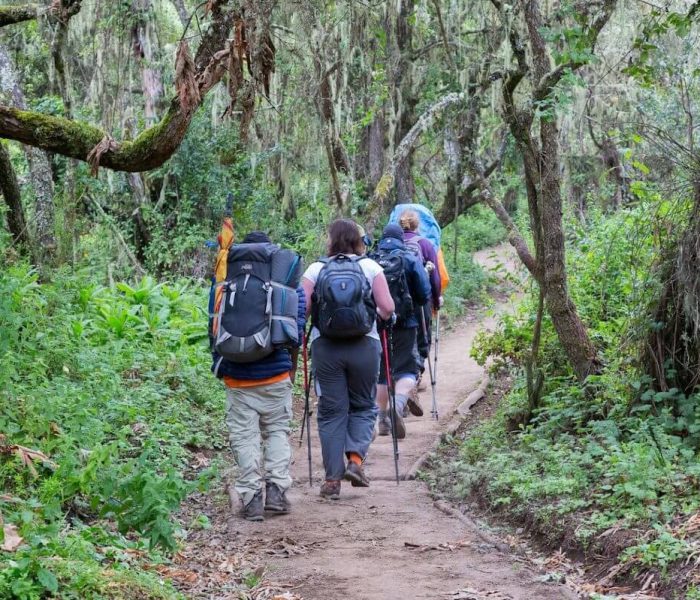
Accessing the Lemosho Route begins with a scenic but lengthy drive from Moshi or Arusha to the Lemosho Gate, which typically takes around three to four hours. Situated on the western base of Mount Kilimanjaro, the route starts in a lush, fertile rainforest the first of the mountain’s four ecological zones. From there, the trek progresses across the Shira Plateau, once Kilimanjaro’s third peak before its collapse.

The journey then leads to Moir Hut, a great spot for acclimatization, where shorter hikes in the nearby Lent Hills help prepare climbers for the higher altitude. After that, we ascend to Lava Tower, a stunning geological feature, before descending into Barranco Valley, one of the most picturesque sections of the route. The trek continues with the challenging climb of the Barranco Wall, followed by a circuitous route through the southern circuit to Karanga Camp and the high-altitude Barafu Camp.

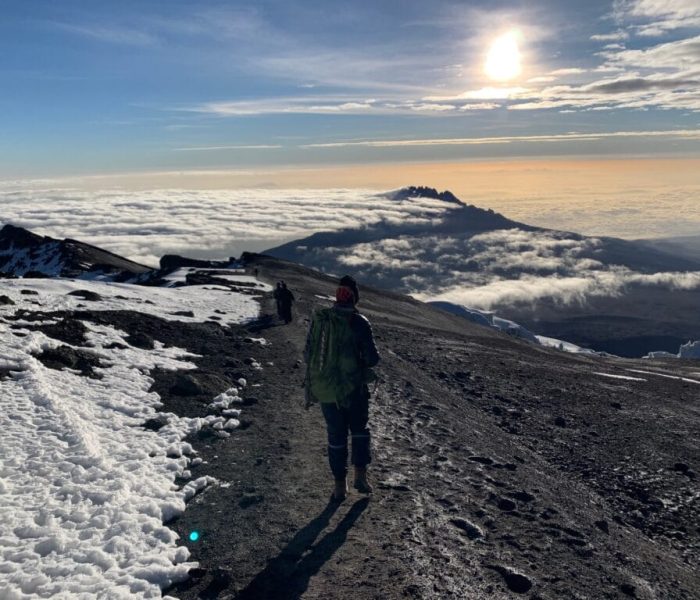
The summit attempt begins early in the morning from Barafu (often during the full moon), navigating the cold and windy conditions of this section. Once the sun rises, climbers shed extra layers as they make their way to the Uhuru Peak summit. After reaching the top, the descent follows the Mweka Route, offering climbers a scenic end to their adventure.
The Lemosho Route is one of the most scenic and rewarding paths to the summit of Mount Kilimanjaro, offering climbers an opportunity to experience a variety of stunning landscapes and landmarks along the way.

gallery

Picture of Planning Your Safari

Planning Your Safari

Organizing a safari in Kenya Destination, can be overwhelming due to the many choices available for transport, accommodation, and activities.

Reviews and Rates

Lemosho Route

Here are some of the key attractions and places to see as you ascend this remarkable route

1. Route Description

As you depart from the gate, you’ll enter the Lemosho Glades, a vibrant rainforest area rich with wildlife. The glades are known for sightings of monkeys, buffalo, and elephants, giving climbers a chance to spot some of Tanzania’s wildlife in their natural habitat.

The air is cool and fresh, and the trail gradually ascends, providing a relaxing and beautiful start to the trek.

2. Shira Plateau

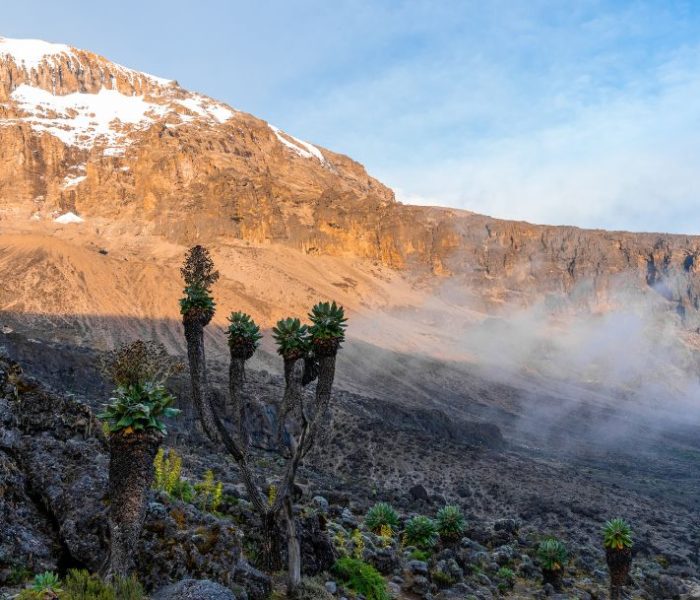
After a couple of days of trekking, you’ll reach the Shira Plateau, one of the highest plateaus in the world. This stunning location offers panoramic views of the mountain and surrounding landscapes.

It’s also a great spot for acclimatization hikes to help prepare for the higher elevations.

3. Cathedral Peak

As you depart from the gate, you’ll enter the Lemosho Glades, a vibrant rainforest area rich with wildlife. The glades are known for sightings of monkeys, buffalo, and elephants, giving climbers a chance to spot some of Tanzania’s wildlife in their natural habitat.

The air is cool and fresh, and the trail gradually ascends, providing a relaxing and beautiful start to the trek.

4. Barranco Wall

One of the most iconic landmarks on the Lemosho Route is the Barranco Wall, a steep rock face that climbers must ascend.

Though challenging, this section offers exhilarating views and a sense of accomplishment once you’ve conquered it. It’s also a prime location for stunning photographs of the surrounding landscape.

5. Barafu Camp

Barafu Camp marks the final base camp before the summit push to Uhuru Peak. Located at an altitude of 4,673 meters (15,331 feet), this camp offers breathtaking views of the summit and surrounding areas. It’s the perfect place to rest before the long and challenging summit night.

6. Uhuru Peak

One of the most iconic landmarks on the Lemosho Route is the Barranco Wall, a steep rock face that climbers must ascend. Though challenging, this section offers exhilarating views and a sense of accomplishment once you’ve conquered it. It’s also a prime location for stunning photographs of the surrounding landscape.

Each of these landmarks and attractions along the Lemosho Route adds to the allure of the climb, offering a diverse range of landscapes, challenges, and experiences. From lush forests to barren volcanic landscapes, the Lemosho Route is a spectacular journey for anyone looking to summit Kilimanjaro.

WHAT MAKES THE LEMOSHO ROUTE SO SPECIAL?

The Lemosho Route offers the perfect blend of all the best features found on Mount Kilimanjaro.

It combines breathtaking scenery, fewer crowds, and an impressive summit success rate, making it one of the most popular routes for reaching Uhuru Peak. Known for its stunning views and scenic trails, the Lemosho Route is highly praised by climbers as the ideal choice for conquering Kilimanjaro.

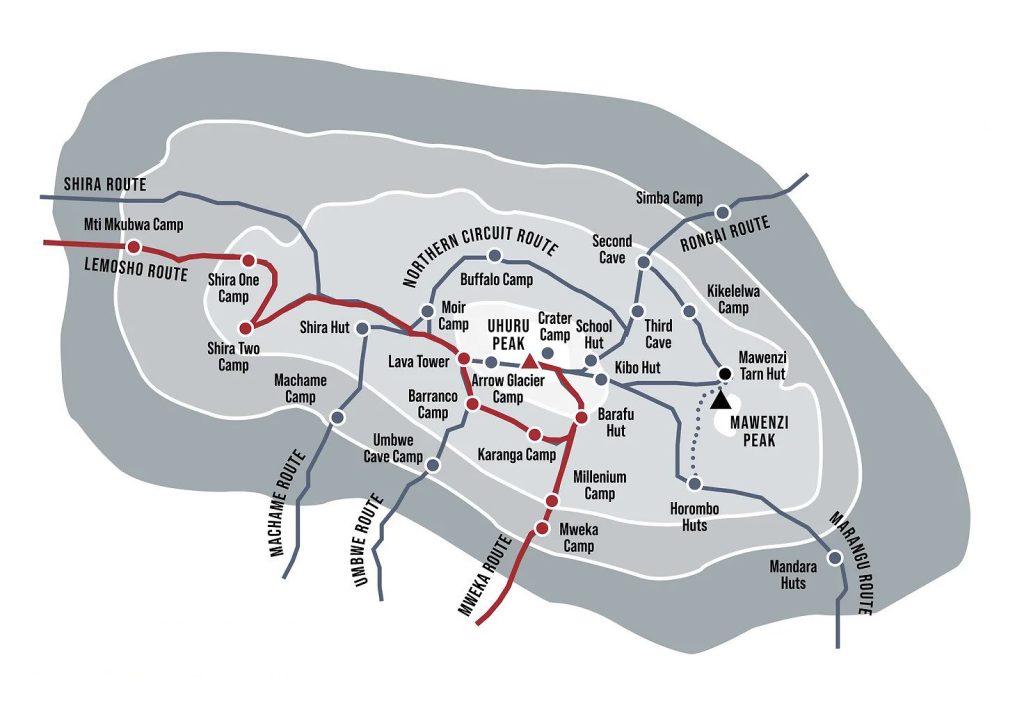
LEMOSHO ROUTE MAP: FROM START TO FINISH

The Lemosho Route is a relatively new addition, designed as an improved alternative to the less-traveled Shira Route.

Starting at the Londorossi Gate on Kilimanjaro’s western side, this trail offers a perfect blend of adventure and breathtaking scenery.
The western flank of Mount Kilimanjaro is a pristine wilderness teeming with wildlife, including antelope, buffalo, and occasionally elephants, providing trekkers with a unique and memorable experience.

LEMOSHO ROUTE SUCCESS RATE

The Lemosho Route stands out as a favorite among climbers, and for good reason. Across all operators, the 8-day Lemosho itinerary boasts an impressive 90% success rate, while our success rates consistently range between 90–95%, showcasing the route’s reliability.
The 7-day Lemosho Route also offers excellent prospects, with a strong 85% success rate to the Uhuru Peak.

However, the shorter 6-day Lemosho Route has a reduced summit success rate of 65%, which, while lower, still outperforms other shorter routes like the 6 Days Machame Route.
For those seeking the ultimate acclimatization experience, the 9-day Northern Circuit offers the most extended journey around Kilimanjaro, providing unparalleled opportunities to adapt to the altitude and maximize summit success.

LEMOSHO ROUTE SCENERY

Designed as an alternative to the Shira Route, the Lemosho Route is widely regarded as the most picturesque trail to Kilimanjaro’s summit. Starting at Lemosho Gate, this route begins at a lower elevation, providing climbers with a more gradual ascent and ample time to adjust to the altitude. It’s a perfect choice for those seeking a stunning and rewarding journey to the peak from the western side of the mountain.

LEMOSHO ROUTE CLIMB COSTS

The cost of climbing Mount Kilimanjaro varies based on the tour operator, the length of the trek, and the size of your group.
For instance, the Lemosho route can be completed in 6 to 8 days. Since park fees, staffing needs, and food supplies increase with longer itineraries, the price of your trek will rise proportionally with the number of days you choose.

BEST SEASON FOR THE LEMOSHO ROUTE

While the Lemosho Route on Mount Kilimanjaro is accessible year-round, the best months for climbing are January to March and June to October, offering ideal weather conditions for a successful trek. In contrast, the rainy and colder months of April, May, and November are less favorable for ascending this scenic route.

CAMPSITES TO SLEEP ALONG THE LEMOSHO ROUTE

When climbing Mount Kilimanjaro via the Lemosho Route, there are several designated camps where climbers will sleep along the way. The route offers a mix of camping sites that vary in altitude, scenery, and amenities, ensuring that trekkers have the opportunity to acclimatize properly as they make their way up the mountain

Here's a breakdown of the main campsites you'll stay at while climbing the Lemosho Route:

The journey begins at Lemosho Gate (2,100 meters / 6,890 feet), where you’ll register before starting the trek. This is where you’ll begin your hike and set off toward the forested areas of Kilimanjaro. If you’re arriving the day before your climb, you’ll likely stay in nearby accommodations in Moshi or Arusha.
1. Mti Mkubwa Camp (2,650 meters / 9,022 feet)
After a few hours of trekking through the lush rainforest, you’ll arrive at Mti Mkubwa Camp, named for the large trees that surround the site. This is a popular starting point for the climb, offering a peaceful atmosphere as you rest for the night. The camp is basic but comfortable, and you’ll spend your first night here under the stars, surrounded by the sounds of nature.
As you continue your ascent, you’ll reach Shira 1 Camp, situated on the Shira Plateau. This camp offers stunning views of the surrounding terrain and is an excellent location for acclimatization. The plateau is also home to several unique plant species, adding to the beauty of the landscape. Shira 1 Camp is the ideal spot to rest and prepare for the next stage of your climb.
After spending some time at Shira 1, you’ll head to Shira 2 Camp, which is slightly higher in elevation. The camp is located near the Shira Cathedral Peak and offers incredible panoramic views of the plateau and surrounding areas. It’s an excellent spot for acclimatization and a relaxing rest before continuing higher on the mountain.

Moir Camp is a serene and secluded campsite on Mount Kilimanjaro, nestled in a valley surrounded by the steep slopes and hills of the Lent Hills. This location is particularly favored for acclimatization treks, especially for climbers on the Lemosho Route. A trek to the Lent Hills at Moir Camp offers an opportunity to ascend up to 4,700 meters, making it an excellent stop for adjusting to the altitude. Moir Hut sits near a volcanic ridge on the northeastern side of the mountain. This camp is known for its tranquility, often being one of the quietest spots on Kilimanjaro.

For those going on the 8-day Lemosho Route, Moir Camp is a highlight of the trek, providing opportunities to explore the mountain further. Climbers can cross to the historic Fisher Camp for a hot lunch before continuing to Moir Camp, where acclimatization for the Northern Circuit Route is an option. The camp also offers a straightforward connection to Lava Tower Camp on Day 4, followed by a descent to Barranco Camp.

Congema Safaris highly recommends Moir Camp, particularly on Day 3 of the Lemosho 8-day trek, for its strategic location and acclimatization advantages. The camp is accessible via the Shira Route, Lemosho Route, and Northern Circuit Route, with the Northern Circuit being the only route that naturally passes through without itinerary adjustments. Situated in the alpine desert region, Moir Camp’s surrounding vegetation is sparse, with limited plant and animal life due to minimal rainfall. The terrain comprises volcanic ash and rocky soil, adding to its rugged and remote appeal.

Moir Camp is a serene and secluded campsite on Mount Kilimanjaro, nestled in a valley surrounded by the steep slopes and hills of the Lent Hills. This location is particularly favored for acclimatization treks, especially for climbers on the Lemosho Route. A trek to the Lent Hills at Moir Camp offers an opportunity to ascend up to 4,700 meters, making it an excellent stop for adjusting to the altitude. Moir Hut sits near a volcanic ridge on the northeastern side of the mountain. This camp is known for its tranquility, often being one of the quietest spots on Kilimanjaro.

For those going on the 8-day Lemosho Route, Moir Camp is a highlight of the trek, providing opportunities to explore the mountain further. Climbers can cross to the historic Fisher Camp for a hot lunch before continuing to Moir Camp, where acclimatization for the Northern Circuit Route is an option. The camp also offers a straightforward connection to Lava Tower Camp on Day 4, followed by a descent to Barranco Camp.

Congema Safaris highly recommends Moir Camp, particularly on Day 3 of the Lemosho 8-day trek, for its strategic location and acclimatization advantages. The camp is accessible via the Shira Route, Lemosho Route, and Northern Circuit Route, with the Northern Circuit being the only route that naturally passes through without itinerary adjustments. Situated in the alpine desert region, Moir Camp’s surrounding vegetation is sparse, with limited plant and animal life due to minimal rainfall. The terrain comprises volcanic ash and rocky soil, adding to its rugged and remote appeal.

One of the most iconic camps on the Lemosho Route is Barranco Camp, located near the base of the Barranco Wall. The camp is surrounded by beautiful landscapes and provides breathtaking views of the valley below. It’s also where climbers will get ready for the challenge of ascending the Barranco Wall, which is one of the more physically demanding parts of the trek. Barranco Camp offers a great place to rest before tackling this section of the Kilimanjaro climb.
After ascending the Barranco Wall, you’ll descend slightly into Karanga Camp, located in a scenic valley with great views of the surrounding peaks. This camp is a popular stop for climbers as it offers a good place to rest and prepare for the final push toward the summit. The area is beautiful, and the camp is generally quieter than others, giving climbers a chance to relax and acclimatize.

Barafu Camp is the last base camp before the final summit push. Located on the southern side of Kilimanjaro, Barafu is where you will rest and prepare for the strenuous summit night. From here, you’ll have an incredible view of the summit as well as the surrounding landscape. The camp offers basic facilities and is an essential stop for climbers to get some rest before attempting the challenging ascent to Uhuru Peak.

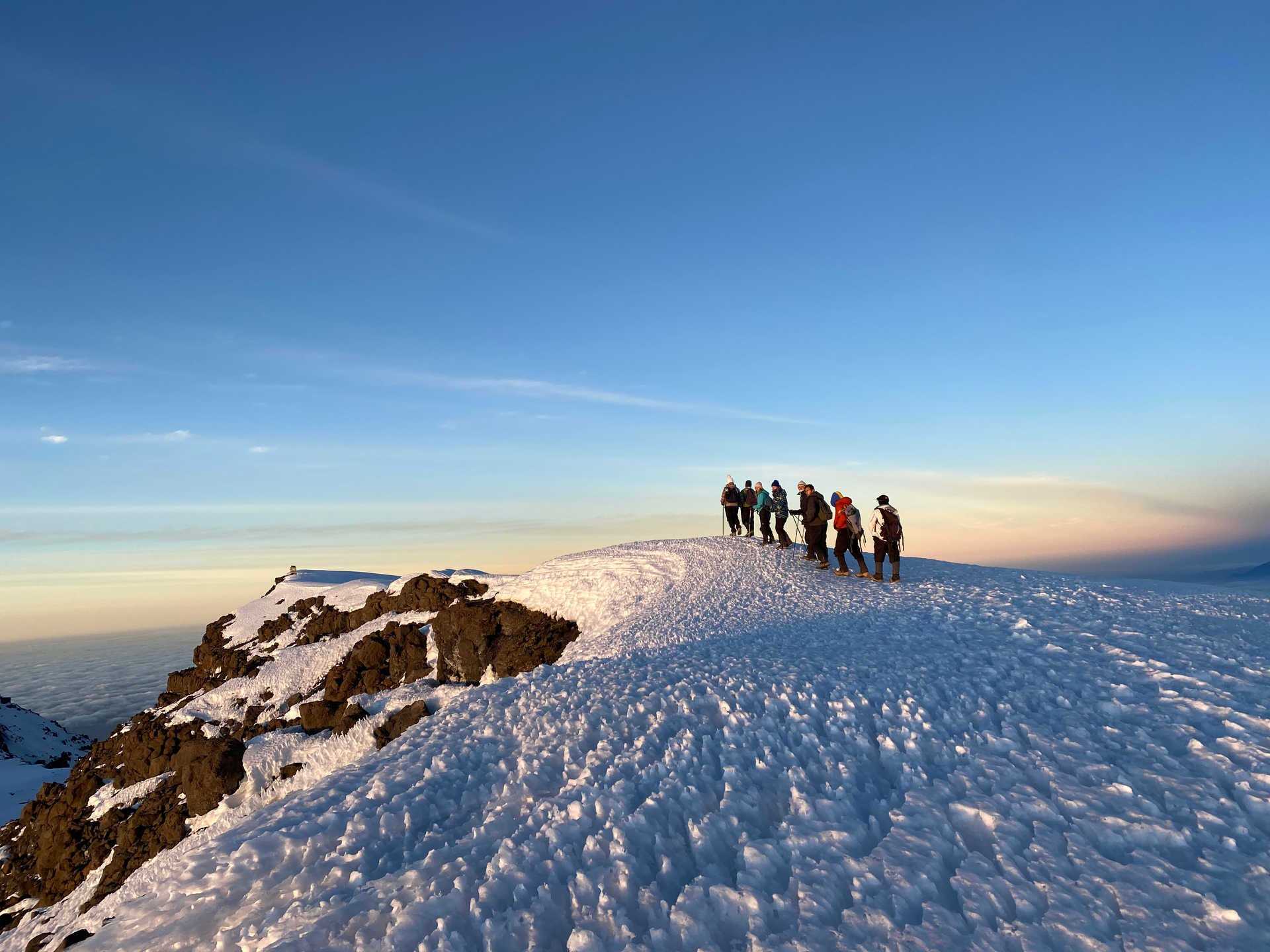
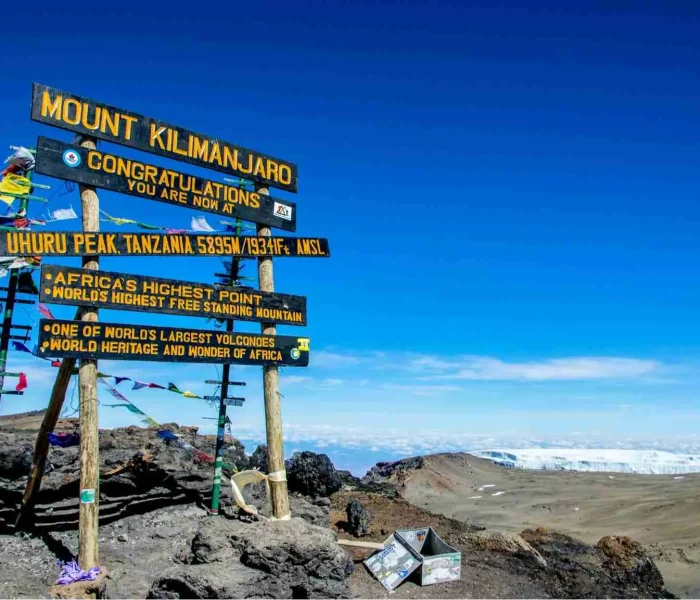
The ultimate goal of the Lemosho Route is to reach Uhuru Peak (5,895 meters / 19,341 feet), the highest point on Mount Kilimanjaro. Climbers typically reach the summit early in the morning after a long and challenging summit night. Once you’ve reached the top, you’ll celebrate your achievement and begin your descent back down to one of the lower camps.

Millennium Campsite serves as a key rest stop for climbers descending Mount Kilimanjaro via the Mweka Route. This campsite is an alternative to Mweka Camp, offering an overnight option for trekkers coming down after summiting. It is commonly used by climbers descending through popular routes like the Northern Circuit, Lemosho, Shira, Machame, and Umbwe. Trekkers can choose to spend the night at either Millennium Campsite or Mweka Hut, which is situated lower on the mountain. The Millennium Campsite is a tent-only accommodation, as there are no permanent structures available. Climbers are required to bring their own camping equipment, making it essential to prepare adequately for this stop.

Mweka Camp is nestled on the southern slopes of Mount Kilimanjaro, within the lush rainforest vegetation zone. Like Mti Mkubwa Camp, it is situated in a cleared area surrounded by dense forest, offering a serene yet rustic environment.

Located just a short distance from the Mweka Gate, the park’s exit point, the camp is approximately a three-hour trek away, making it the final stop for most climbers on their descent. Due to its proximity to the exit gate, many climbers opt to bypass Mweka Camp, choosing instead to complete their descent in a single stretch, as the finish line is just a few hours away.

SLEEPING ARRANGEMENTS ON THE LEMOSHO ROUTE

Lemosho Route is typically a camping trek, climbers are provided with tents for their overnight stays. Most trekkers choose to bring their own sleeping bags and mats, but Congema Safaris will supply tents and provide porters to carry the gear.

The campsites vary in their amenities, with some offering more basic facilities and others providing slightly more comfort.

ACCLIMATIZATION AND COMFORT ON THE LEMOSHO ROUTE

The Lemosho Route’s longer itinerary provides ample time for acclimatization, and climbers will have multiple opportunities to rest and adjust to the increasing altitude. The campsites are spread out at strategic intervals to allow your body to acclimate gradually, reducing the risk of altitude sickness.
While the Lemosho Route may not offer luxurious accommodations, it provides a well-balanced experience of comfort and challenge. The peace and solitude of the camps, combined with breathtaking views and opportunities to interact with fellow trekkers, make for a truly memorable Kilimanjaro climb.

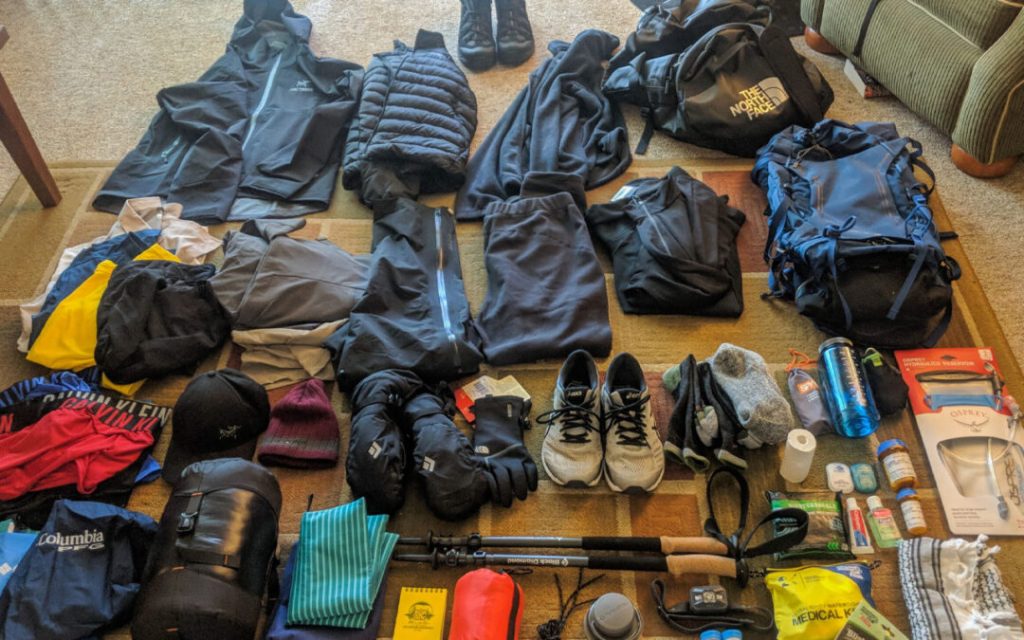
PACKING LIST FOR THE LEMOSHO ROUTE

While the Lemosho Route on Mount Kilimanjaro is accessible year-round, the best months for climbing are January to March and June to October, offering ideal weather conditions for a successful trek. In contrast, the rainy and colder months of April, May, and November are less favorable for ascending this scenic route.

GETTING TO THE LEMOSHO ROUTE

To reach the Lemosho Route, you’ll need to fly into Kilimanjaro International Airport (JRO), located near Moshi and Arusha in Tanzania. Travelers arriving from the everywhere in the world will be greeted by the official Congema Safaris team at the airport. They will then transfer you to your hotel, with the journey to the Lemosho Route scheduled for the following day.

HOW TO GET FIT FOR THE LEMOSHO ROUTE

Getting ready to tackle the Lemosho Route involves rigorous training to ensure a successful ascent to Uhuru Peak. Additionally, be sure to pack all the essential climbing gear and equipment. For a complete guide for how to prepare for the Kilimanjaro climb, check out our detailed full guide.

What our Client Say

Design your own trip

Choose a destination, pick your properties, and we’ll do the rest

1
Browse
Look through our itineraries for inspiration, and call our Travel Consultants
2
Create
Discuss your wish list with us, and we’ll use our expertise to design a unique itinerary for you
3
Customise
We’re committed to refining your itinerary until we’ve created the perfect personalised trip for you