EXPLORE

Gorilla Tracking

About Mountain Gorillas
Picture of Chat to an Kenya Safari expert

Chat to an Kenya Safari expert

Get advice and suggestions to make this your perfect trip. or call us on:
+255 755 003116

Picture of Chat to an Kenya Safari expert

Chat to an Kenya Safari expert

Get advice and suggestions to make this your perfect trip. or call us on:
+255 755 003116

Overview

Gorillas, the majestic giants of the primate world, trace their evolutionary roots back approximately 9 million years when they diverged from a common ancestor shared with monkeys and other apes in regions spanning Arabia and Africa. 

Over millions of years, their lineage split further, with eastern gorillas branching off from their western gorilla counterparts in West and Central Africa around 2 million years ago. 

This divergence eventually led to the emergence of two distinct subspecies we recognize today: the critically endangered mountain gorillas and eastern lowland gorillas, which separated roughly 400,000 years ago.

The term “gorilla” entered scientific vocabulary in 1852, replacing the earlier classification under the genus Troglodytes. However, it wasn’t until 1967 that renowned primatologist Colin Groves revolutionized gorilla taxonomy by formally categorizing them into three species: the western lowland gorilla, eastern lowland gorilla, and the iconic mountain gorilla, a framework that remains foundational in primatology today.

The western gorilla is classified into two subspecies: the western lowland gorilla and the Cross River gorilla. On the other hand, the eastern gorilla consists of the mountain gorilla and the eastern lowland gorilla (also known as Grauer’s gorilla). Among all gorilla subspecies, the eastern lowland gorilla is the largest, followed by the mountain gorilla. The Cross River gorilla, however, is the smallest.

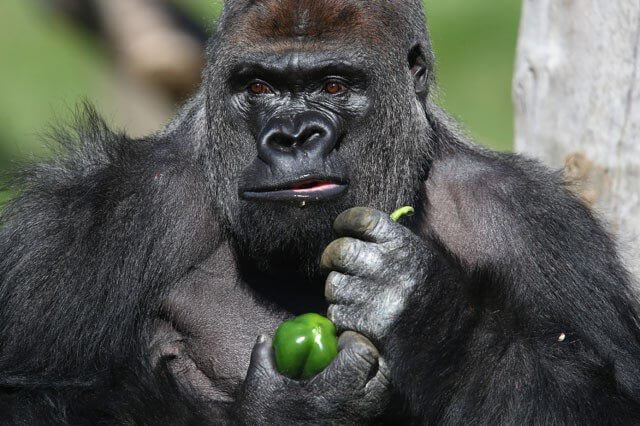
Western lowland gorillas inhabit the swamps and forests of central Africa, specifically in countries such as Gabon, Republic of Congo, Central African Republic, Equatorial Guinea, Angola, and Cameroon. The majority of the population is concentrated in the forests of the Republic of Congo. In captivity, nearly all gorillas are western lowland gorillas. Although they are the smallest among gorilla subspecies, adult western lowland gorillas can weigh up to 270 kilograms in the wild, with some individuals even reaching higher weights in captivity.

As of current estimates, the western lowland gorilla population exceeds 300,000, with around 5,000 eastern lowland gorillas, 1,000 mountain gorillas, and fewer than 400 Cross River gorillas remaining. All gorilla subspecies are listed as critically endangered by the International Union for Conservation of Nature (IUCN), due to significant population declines over the past century. Major threats to gorilla survival include human diseases, habitat loss, and poaching for bushmeat.

Where Are The Mountain Gorilla Found?

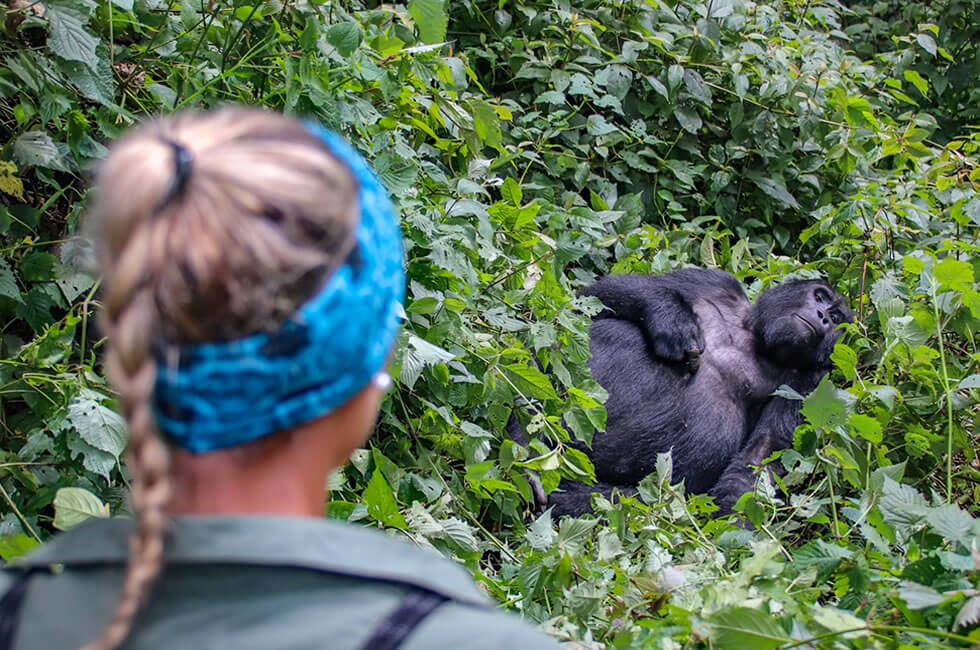
Mountain gorillas are native to only three countries in Africa: Uganda, Rwanda, and the Democratic Republic of Congo (DR Congo). In Uganda, they can be found in Bwindi Impenetrable Forest National Park and Mgahinga Gorilla National Park. Rwanda is home to mountain gorillas in Volcanoes National Park, while DR Congo’s Virunga National Park also hosts these incredible creatures. These regions offer the perfect habitat, ecology, and altitude (ranging from 7,200 to 14,100 feet) for mountain gorillas to thrive. The high-altitude environment is characterized by dense vegetation, cool temperatures, and frequent cloud cover, creating an ideal setting for these magnificent creatures.

According to World Wildlife, Uganda is home to half of the world’s remaining mountain gorillas.

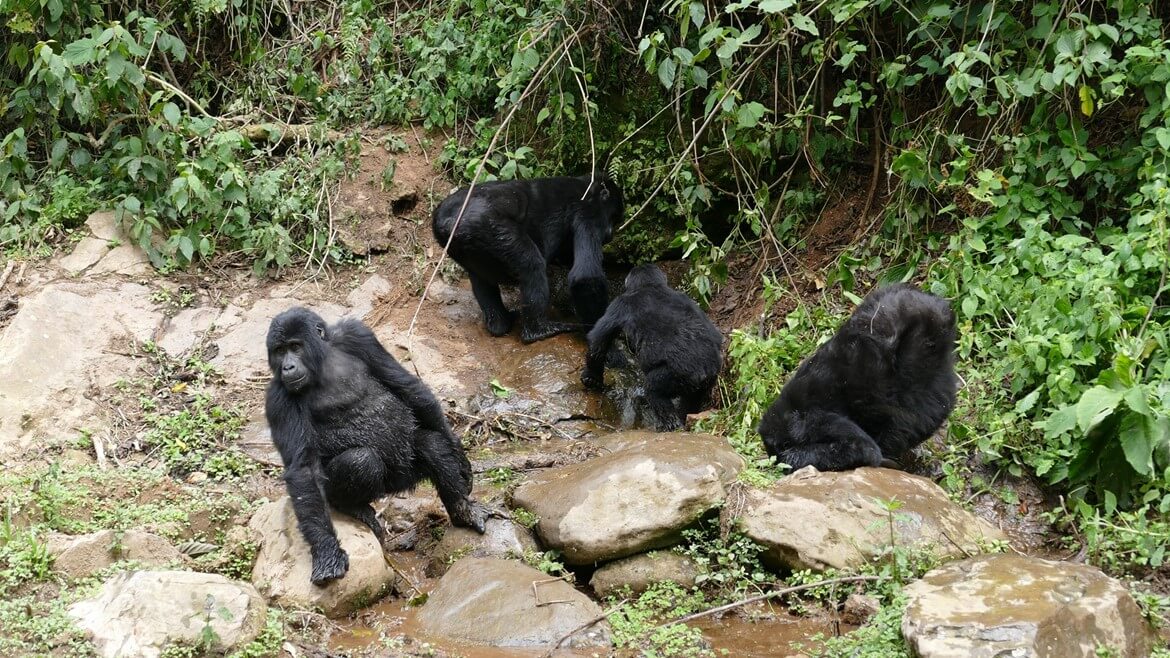
Mountain gorillas live along the mountainous borders of Uganda, Rwanda, and DR Congo. They are larger than other gorilla species, with darker coats, and they typically reside within a small, specific range. These gorillas are led by a dominant silverback male and thrive in dense jungles at high altitudes. They primarily feed on foliage during the morning and afternoon. Despite their impressive size, mountain gorillas are known to be calmer and more peaceful than lowland gorillas. They continuously move to new feeding grounds and build nests for sleeping each day. Mountain gorillas are not kept in zoos, as they are strictly found in the wild.

The western world first became aware of mountain gorillas when German explorer Von Berenge spotted a group in 1902 while trekking through Rwanda’s Mount Sabyinyo. Further studies revealed that mountain gorillas are a distinct and larger species compared to the western lowland gorilla.

What are the Mountain Gorillas Look Like?

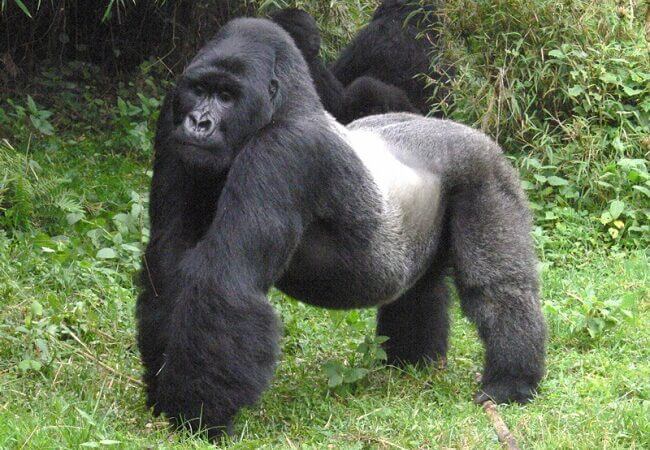
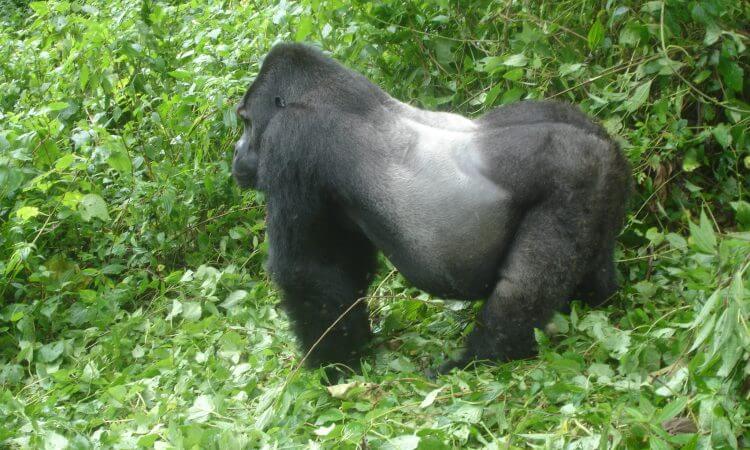
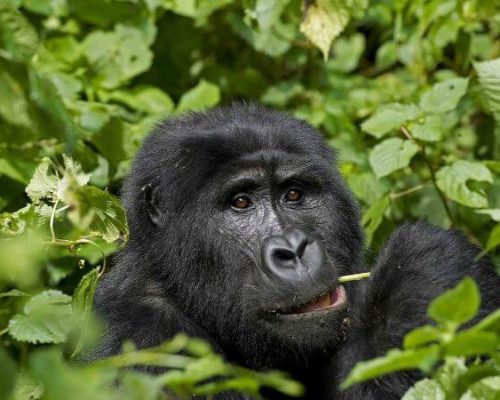
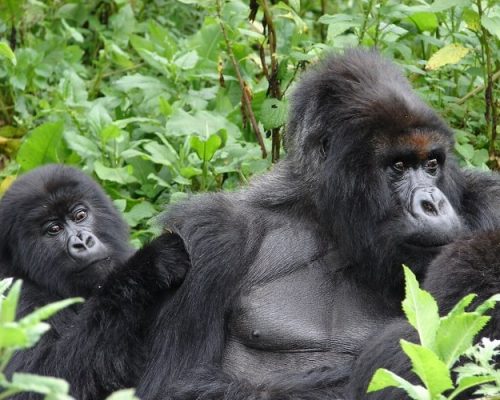
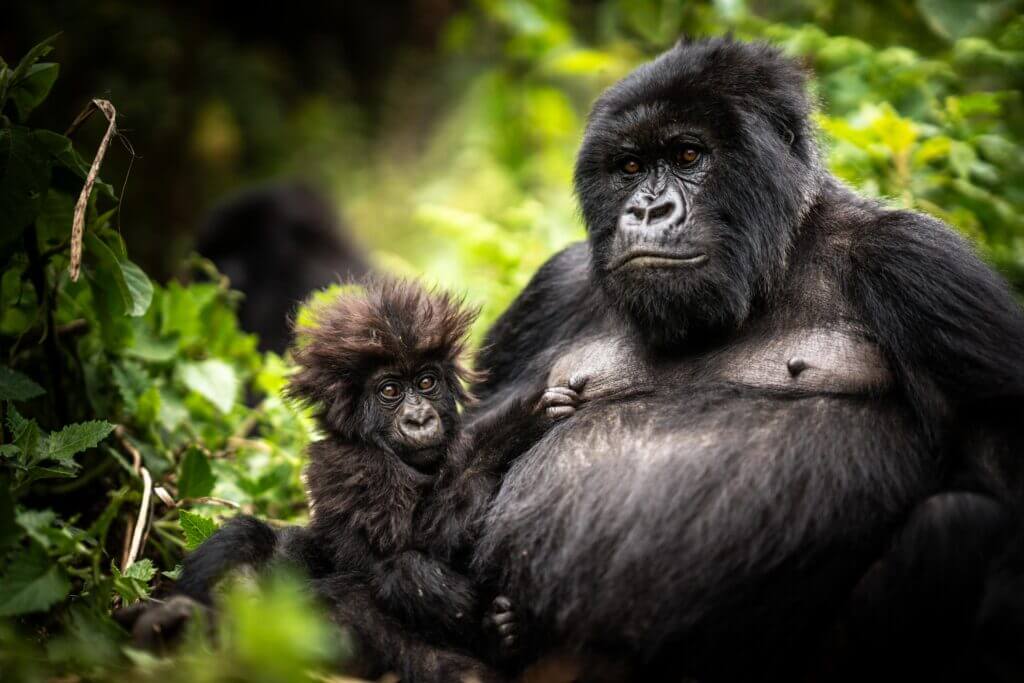
Mountain gorillas have the thickest fur of all gorilla species in Africa, an adaptation that helps them survive in the cold, high-altitude regions they inhabit. Adult males are called silverbacks due to the distinctive silver hair on their backs. Female mountain gorillas typically weigh around 100 kilograms, while dominant silverbacks can reach approximately 195 kilograms. In addition to their impressive size, silverbacks are taller and up to ten times stronger than an adult human.

Despite their strength, mountain gorillas are generally smaller and weigh less than eastern lowland gorillas.

Like all gorilla species, mountain gorillas can be identified by their unique nose prints, which are distinct to each individual. They have dark brown eyes and hands that are longer than their legs. While mountain gorillas are capable of standing and walking upright, they typically prefer knuckle-walking, using their fingers to support their weight as they move.

What are Silverback Mountain Gorillas?

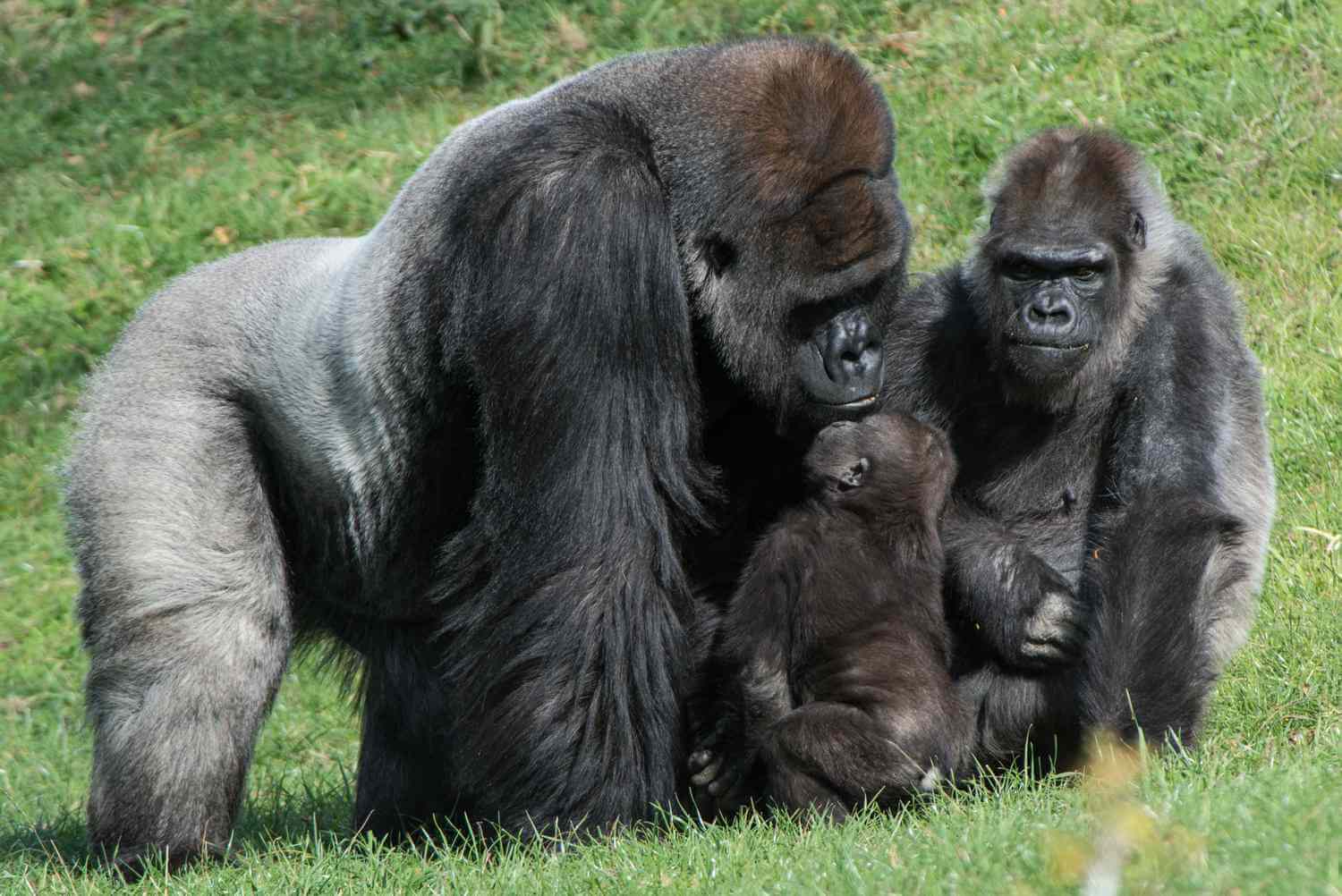
Gorillas live in groups or families led by a dominant male known as a silverback. The term “silverback” refers to an adult male gorilla, not a specific species. Silverbacks are easily identified by the grayish or white hair that develops on their back and shoulders as they mature. A male gorilla that is not yet old enough to be a silverback but is too mature to be considered a juvenile is called a blackback.

Silverbacks are significantly larger than females, with a bigger head and body, and can weigh up to 270 kilograms. Male gorillas reach adulthood around the age of 8, at which point they typically leave their birth group to either live alone or join other males, still referred to as blackbacks. They officially become silverbacks when they are fully mature, typically around 12 to 13 years old, at which point the hair on their back and shoulders turns silver or gray.

Mature blackbacks or silverbacks often stay close to a group, aiming to challenge the dominant silverback when they are strong enough. If unsuccessful in taking leadership, they may attempt to steal females from the group to form their own. Interestingly, some males never leave their original group upon reaching maturity. These males remain loyal to the dominant silverback, helping protect the group, a behavior more common among mountain gorillas than western lowland gorillas.

While a group may have multiple silverbacks, only one holds the title of dominant silverback, with full authority over the group. This leader determines the group’s activities, including when to eat, rest, and mate. Female gorillas initiate mating when they reach maturity, and the dominant silverback mates with all the females in the group. A typical gorilla group consists of between 5 and 35 individuals, including females, juveniles, infants, and a few adult males. As females mature, they leave the group to prevent mating with their father.

Strength of Mountain Gorilla

The strength of a mountain gorilla is truly remarkable. A fully grown silverback gorilla can weigh roughly twice as much as an average adult man and is more than 10 times stronger. This immense strength is due to their higher muscle mass ratio, making them incredibly powerful.

While no recorded fights exist between an adult male human and a silverback, it’s clear who would prevail in such a scenario. An angry silverback would easily overpower a human, showcasing its immense strength and power. However, it’s important to note that silverbacks are generally not aggressive unless they feel threatened.

gallery

Picture of Planning Your Safari

Planning Your Safari

Organizing a safari in Kenya Destination, can be overwhelming due to the many choices available for transport, accommodation, and activities.

Reviews and Rates

Gorilla Tracking

Are mountain Gorillas Aggressive?

The dominant silverback gorilla leads his group through charisma and by setting an example, maintaining a peaceful demeanor. Aggression is rare for a silverback, and he only becomes forceful when faced with a threat, intruders, or to assert his dominance. 

Intruders can be other male gorillas from different groups, rebellious members within his own group, predators like leopards, or humans visiting a non-habituated gorilla group.

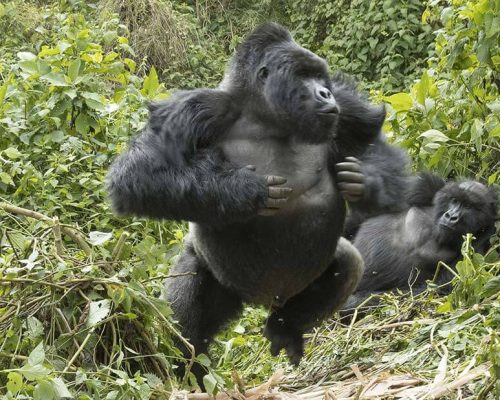
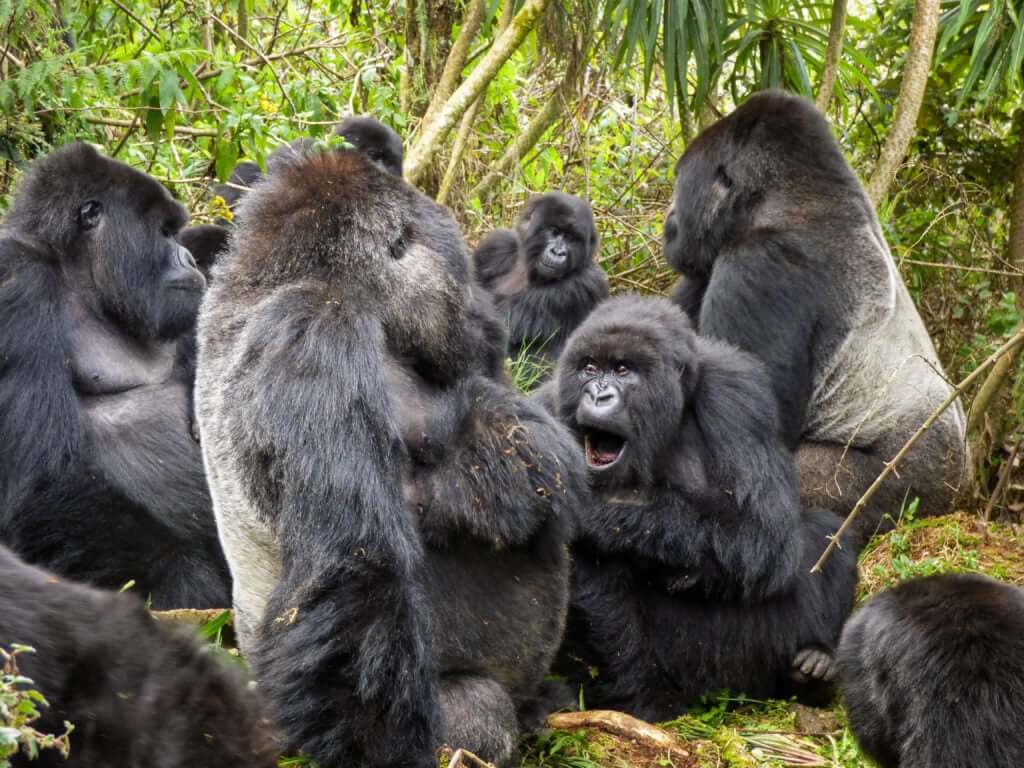
When a silverback detects a threat or another silverback approaching from a different group, he typically begins by warning the intruder. He may stand tall and drum on his chest to signal his presence. If this doesn’t work, he will intensify the warning by tearing plants and throwing them, accompanied by loud vocalizations. The silverback may then perform a mock charge, using all four limbs. If the intruder remains undeterred, the silverback will resort to direct action, using powerful strikes with his hands or teeth.

A silverback’s commitment to defending his group is fierce, especially when it comes to protecting infants. This protective nature is one reason why poachers and illegal pet traders often target silverbacks, hoping to capture infant gorillas.

Mountain Gorilla IQ

Despite walking on all fours and having fur, mountain gorillas are closely related to humans. Sharing 98% of our DNA, they demonstrate impressive intelligence, including the ability to use tools in various ways, such as flushing out termites. Like humans, each mountain gorilla has a unique identifier, its nose print, which is distinct for every individual.

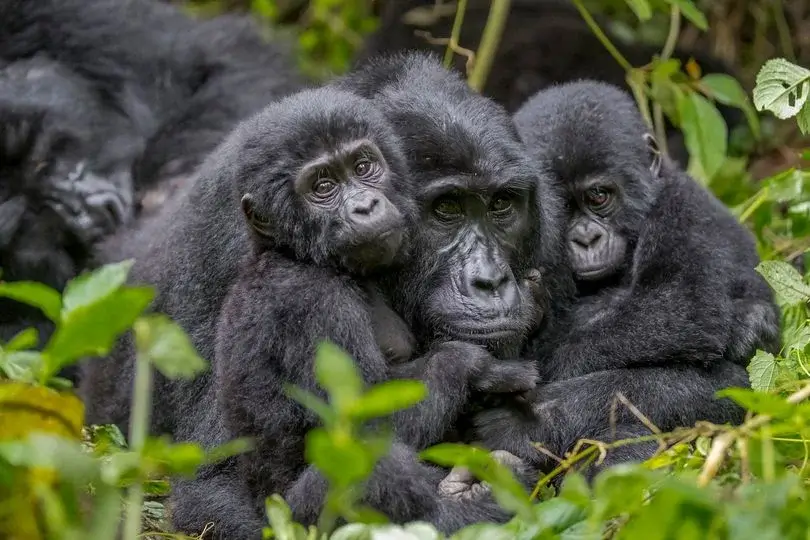
Mountain gorillas live in family groups, similar to human social structures, consisting of a dominant male (silverback), other males, females, juveniles, and infants. Observing interactions within a gorilla group often mirrors human behavior, showcasing complex social dynamics and close familial bonds.

Mountain Gorilla Daily Life and Social Group Structure

Mountain gorillas are diurnal, meaning they are active only during the day, typically from 6:00 am to 6:00 pm. Most of their time is spent feeding on a variety of plant-based foods, including insects, shoots, leaves, roots, flowers, and fruits, to support their large size. 

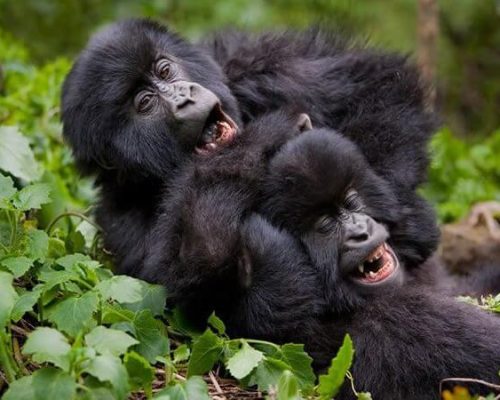
The morning is the most active eating time, followed by a rest period around midday, where they also engage in bonding activities such as grooming to remove parasites and dirt. This midday break is when you can observe playful juveniles chasing, somersaulting, and wrestling, with adults sometimes joining in if invited. Throughout the day, group members use vocalizations, such as barks and grunts, to locate each other within the dense vegetation.

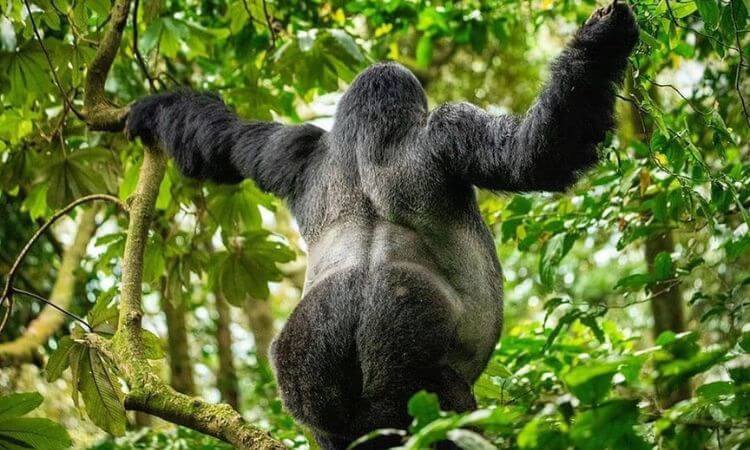
As evening approaches, each adult gorilla builds a nest using tree leaves and other vegetation, while infants share the nest with their mothers. Mountain gorillas spend most of their time on the ground, building nests there, while tree climbing is typically reserved for juveniles. Adults may climb trees in search of fruit, but they rarely do so due to the risk of falling from unstable branches, which can lead to injury or death.

Mountain gorillas have a natural aversion to certain insects and reptiles, such as caterpillars and chameleons, although the reason for this fear is still unclear. They also dislike rain and will avoid crossing water unless they can do so by walking over fallen logs or trees. 

One distinguishing trait of mountain gorillas, compared to other primates, is their relatively stable group structure. These gorillas live in cohesive groups led by a dominant silverback, with females maintaining close bonds to the silverback for extended periods. While females may leave the group upon reaching maturity to join other groups or form their own with a lone male, many remain loyal to the dominant silverback for life.

Mating among mountain gorillas is typically initiated by a fertile female, with the dominant silverback mating with all females in the group. Unlike other primate species, mountain gorillas do not control a specific territory, and the silverback’s role is mainly to defend the group from intruders, such as other gorillas, leopards, or humans. Interestingly, about 36% of mountain gorilla groups contain more than one silverback, but only one remains the dominant leader.

The silverback is the undisputed leader of the group, dictating the movements and feeding grounds, resolving conflicts, and ensuring the safety of the group. In the event of a female’s death or departure, the silverback will take care of her offspring. He also plays a crucial role in removing snares from group members. If a silverback dies and no suitable leader emerges, the group may split or accept a new leader from another group. However, this could lead to the new silverback killing the infants of the deceased leader.

Despite their immense strength and power, mountain gorillas are generally gentle and shy creatures. Aggression is only used as a defense mechanism when threatened or when encountering another gorilla group. In confrontations, silverbacks may begin by threatening or intimidating intruders, but if a fight is necessary, it can become violent, with silverbacks using their sharp teeth to inflict severe injuries.

MOUNTAIN GORILLA DIET

Silverback gorillas primarily have a plant-based diet, consuming a variety of fruits, shoots, leaves, and sometimes insects like termites and ants. However, the diet of mountain gorilla silverbacks is slightly different. They predominantly feed on stems and leaves, but may also consume fungi, flowers, and bark. The availability of food can vary depending on the season, with rainy and dry periods influencing what is most abundant.

Mountain gorillas, in particular, benefit from a rich and diverse diet due to the wide range of vegetation in their habitat, offering them a greater variety of food compared to other gorilla subspecies. It’s fascinating to think that such large and powerful creatures, like silverbacks, survive on a vegetarian diet, with no need for meat despite their impressive strength.

Mountain Gorilla Mating Habits and Reproductive Cycle

Gorilla mating habits are influenced by several factors, with their reproductive cycle playing a significant role. Female gorillas reach sexual maturity around 10 to 12 years of age. Although they begin their ovulation cycle earlier, around six years old, they remain infertile until they are fully mature at about 10 years old. The dominant silverback gorilla has exclusive mating rights with the females in the group, while most adult males leave their birth group and either remain solitary or form coalitions with other bachelor males until they can steal females from other groups.

Females typically leave their father’s group to prevent inbreeding. Studies on mountain gorillas indicate that when females stay in their birth group for long periods, they avoid mating with their dominant silverback (father) by choosing less dominant males in the group. If forced to mate with their father, the chances of conception are low. However, in cross-river gorilla groups, inbreeding is more common.

Unlike chimpanzees, the signs of a female gorilla’s readiness to mate are not immediately obvious. Female gorillas often initiate mating when they are ready. To do this, a female will slowly approach the dominant male, making sustained eye contact and pursing her lips. If the silverback does not respond, she may slap the ground to attract his attention. If he remains uninterested, she might attempt mating with other males in the group.

The silverback can also initiate mating by approaching the female, touching her, or making a display with a grunt. If the female hesitates, the male may become aggressive, charging or slapping her to compel her to mate. Mating generally occurs on the ground, with the silverback mounting the smaller female, who usually kneels during copulation. Interestingly, both mountain and western lowland gorillas have been observed engaging in face-to-face mating, a behavior traditionally associated with bonobos and humans.

Sexual competition and mating for leisure also occur in gorilla groups. Female gorillas sometimes use mating to gain favor with the silverback and prevent him from mating with other females. Pregnant females have been observed mating with the silverback to reduce the chances of other fertile females conceiving. This competitive behavior is common when the silverback’s attention shifts to a fertile female, leading to increased rivalry among the females.

While male western gorillas tend to mate with all females in the group, mountain gorilla silverbacks usually prefer mating exclusively with a fertile female. If successful, the female’s pregnancy lasts about 8.5 months, and they typically give birth every four years. During pregnancy, the female’s body changes subtly her breast size increases, and she shows signs of discomfort. Birth usually occurs in the morning, and the mother will stay close to the dominant silverback for extra protection during the first five months, ensuring the infant’s safety from other group members.

A female gorilla typically produces around eight offspring throughout her life, but only a few survive to adulthood. Males do not play an active role in infant care; their primary responsibility is ensuring the infants’ acceptance by other group members and protecting them from bullying. The mother’s bond with the dominant silverback is crucial for the infant’s protection during its early months.

What our Client Say

Design your own trip

Choose a destination, pick your properties, and we’ll do the rest

1
Browse
Look through our itineraries for inspiration, and call our Travel Consultants
2
Create
Discuss your wish list with us, and we’ll use our expertise to design a unique itinerary for you
3
Customise
We’re committed to refining your itinerary until we’ve created the perfect personalised trip for you